
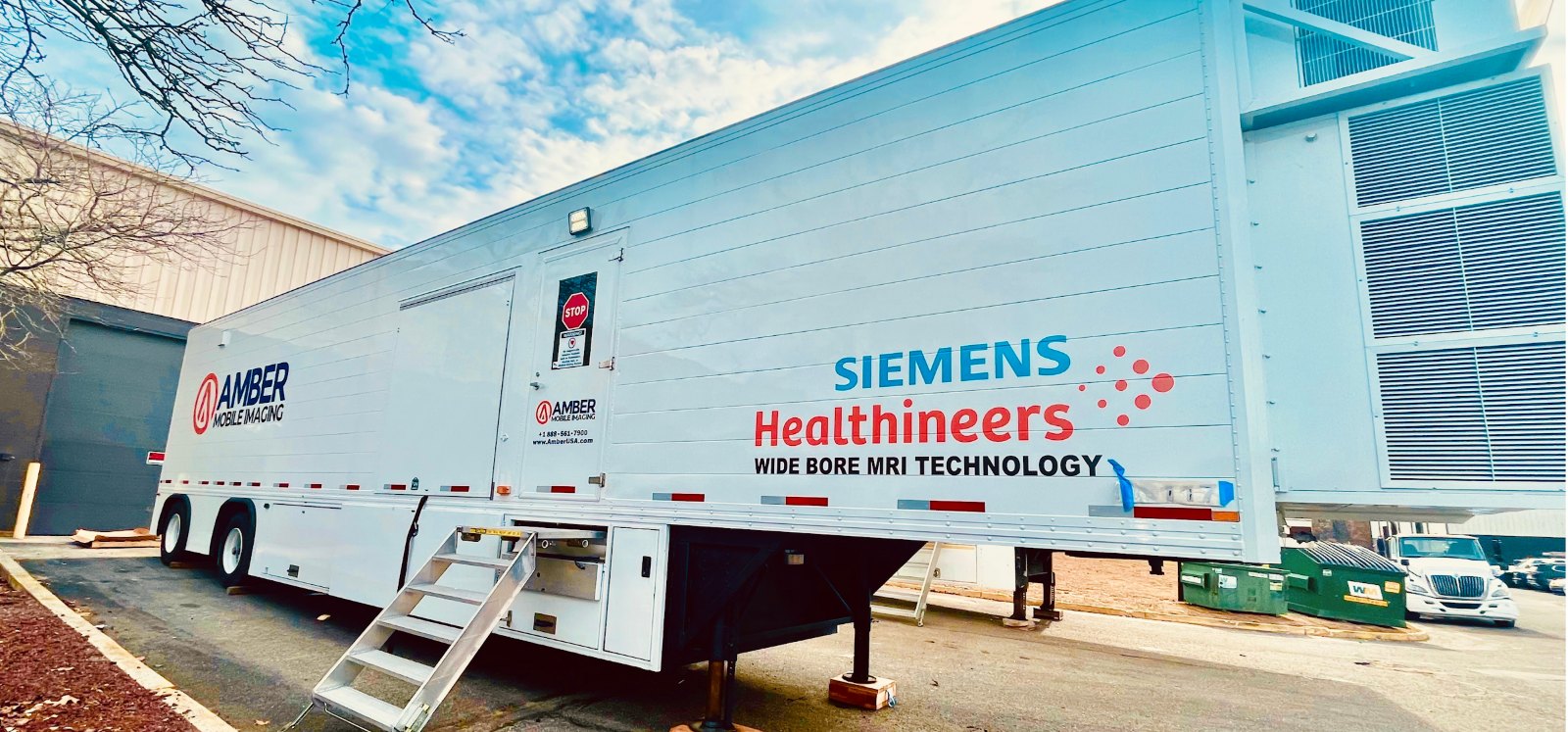
Renting a mobile MRI puts a working scanner in your parking lot inside a self-contained trailer, typically for $25,000 to $45,000 per month depending on field strength, coach age, coil package, and contract length, plus transport that commonly runs $5.50 to $10.00 per mile each way. A turnkey mobile MRI rental usually covers the coach, magnet, coils, HVAC, patient sub-waiting area, delivery, setup, and service coverage. It does not cover technologists, PACS licensing in every case, the concrete pad, utilities, or permits. Most facilities rent for interim coverage during a system replacement, construction, seasonal overflow, a service line trial, or unplanned downtime. Plan four to eight weeks from first call to first patient.
Table of Contents
- Five Situations That Drive Mobile MRI Rentals
- What a Turnkey Mobile MRI Rental Includes
- What a Rental Does Not Include
- Mobile MRI Cost: Monthly Rates and Drivers
- The Full Cost Picture, Line by Line
- Site Requirements: Pad, Power, Access, ADA
- Zoning and Permitting
- Rental Terms and Notice Periods
- From First Call to First Patient
- Choosing the Right Mobile MRI System
- Rent vs. Lease vs. Buy
- Mobile MRI Rental FAQ
- Request a Mobile MRI Rental Quote
- Related Guides
Five Situations That Drive Mobile MRI Rentals
Nearly every rental we quote traces back to one of five scenarios. Identifying yours early shapes the term length, the field strength, and the site work you should budget.
- 1. Interim coverage during a replacement or upgrade. When a fixed magnet comes out and a new one goes in, the room is unusable for weeks or months. A coach outside keeps your schedule intact and keeps referring physicians from routing patients elsewhere. These rentals commonly run three to nine months.
- 2. Construction and renovation. Expansions, department moves, and roof or HVAC work take a suite offline even when the scanner is fine. These are planned well ahead, which gives you the best pricing and the widest choice of coaches.
- 3. Seasonal or overflow volume. Snowbird markets, university towns, and post-holiday surges create predictable spikes. Four to six months of a second scanner costs far less than a magnet room you would underuse the rest of the year.
- 4. Testing a service line before committing capital. Six to twelve months of rental teaches you your real volume, payer mix, and staffing burden before you sign a capital request. Many facilities then move to refurbished MRI equipment.
- 5. Disaster and unplanned downtime. Quenches, chiller failures, storm damage, and gradient failures do not wait for budget cycles. Emergency rentals move fast, but availability drives everything, so know your options in advance.
What a Turnkey Mobile MRI Rental Includes
“Turnkey” gets used loosely, so read every proposal against the same checklist. A complete mobile MRI rental from Amber Diagnostics arrives ready to scan, with 100% turnkey delivery and setup.
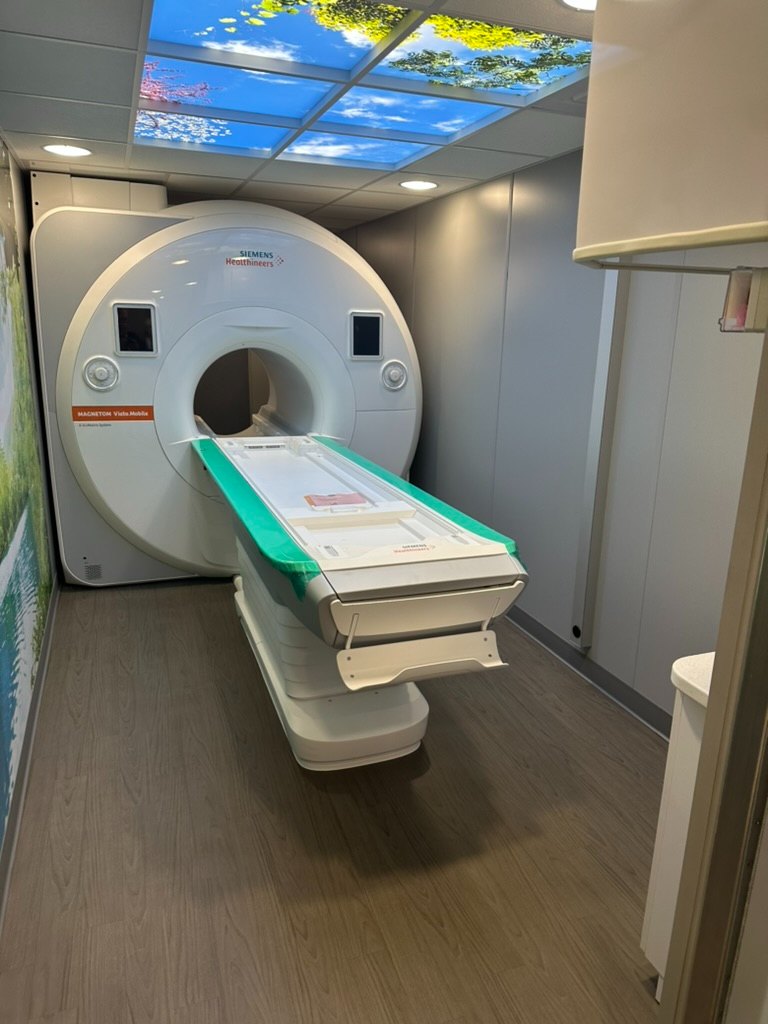
- The coach or trailer. A purpose-built, RF-shielded unit, with magnet room, control area, and equipment room integrated and tested.
- The magnet. Most commonly a 1.5T short-bore system; wide-bore and 3.0T coaches exist in smaller numbers and price higher.
- Coil package. Head, spine, body, extremity, and shoulder coils as configured. Specialty coils are usually an add-on, so name them in your request.
- HVAC and magnet cooling, including the chiller arrangement the magnet requires.
- Patient sub-waiting area for gowning, screening, and waiting.
- Power arrangement. Shore power from your building, or a generator for sites without adequate service.
- Delivery, positioning, and setup. Transport, leveling and jacking, hookup, ramp-up if required, and system verification.
- Service coverage and cryogens, so a repair does not become a surprise invoice.
- Applications support. Protocol setup and technologist orientation on arrival.
Get those items confirmed in writing. The gap between a quote near the bottom of that monthly range and one near the top is often three or four of these lines.
What a Rental Does Not Include
These items stay on your plate in nearly every mobile MRI trailer rental, and they are where first-time renters get surprised: staffing, network and PACS work, the concrete pad, electrical service, permits, canopy and ramp, and insurance while the unit sits at your site.
| Item | Included in the Rental | Your Responsibility |
|---|---|---|
| RF-shielded coach and magnet | Yes | No |
| Standard coil package | Yes | Specialty coils often added |
| HVAC, chiller, cryogen management | Yes | No |
| Delivery, setup, removal | Yes (transport billed by mile) | No |
| Preventive and corrective service | Yes | No |
| Concrete pad and grading | No | Yes |
| Electrical service and disconnect | No | Yes |
| Generator if no shore power | Available as add-on | Fuel and refueling |
| Canopy, ramp, ADA path | Often available | Site conditions, walkway |
| Permits and zoning approval | No | Yes |
| PACS integration and network | Varies by unit | Usually yes |
| Technologists and reading | No | Yes |
Mobile MRI Cost: Monthly Rates and Drivers
Rental pricing is quote-driven, but the market clusters tightly enough to budget from. Monthly rates commonly land between $25,000 and $45,000, with transport billed separately at roughly $5.50 to $10.00 per mile each way. Pricing and availability vary based on location, equipment selection, and current market conditions.
Mobile MRI rentals commonly run $25,000–$45,000 per month, with transport billed separately at roughly $5.50–$10.00 per mile each way. Where you land depends on field strength, system age, term length, and how much service coverage is bundled in.
- Field strength and bore. A standard-bore 1.5T coach sits low-to-middle in the range; 3.0T and wide-bore coaches are scarcer and price at the top.
- Coach and magnet generation. A late-model coach with current software and newer gradients costs more than a proven older platform.
- Term length. Monthly rates fall as the term extends. A one-month emergency rental carries a real premium over a twelve-month commitment.
- Coil and software configuration. Specialty coils and advanced packages add to the rate.
- Distance from the fleet. Transport is mileage-based both ways, so geography matters as much as the machine.
- Availability. Availability moves with how many large replacement projects overlap, so the more lead time you can give us, the more configurations we can put in front of you.
Our mobile MRI rental pricing guide breaks these drivers down further, and the mobile MRI rental FAQ covers the contract questions that surface on the second call.
The Full Cost Picture, Line by Line
The monthly rate is only part of the budget. Build your pro forma around every line below.
| Cost Line | Typical Range (Hedged) | Notes |
|---|---|---|
| Monthly rental rate | Commonly $25,000–$45,000 | Field strength, coach age, coils, term |
| Transport in and out | $5.50–$10.00 per mile each way | Billed both directions |
| Concrete pad and site prep | Varies widely by site | Soil, grading, curb cuts, existing pad |
| Electrical service to the pad | Varies by distance to panel | Typically 480V three-phase |
| Generator rental and fuel | Add-on line item | Only if shore power is unavailable |
| Canopy, ramp, ADA walkway | Add-on line item | Weather protection, accessible access |
| Permits and zoning fees | Municipality-specific | Temporary structure and electrical |
| Staffing | Your payroll or agency rate | Tech coverage for scanning hours |
| Insurance | Rider on your policy | Property and liability while on site |
Want a number for your address, magnet requirement, and start date? Talk to a rental specialist and we will price the coach, mileage, and accessories in one proposal.
Site Requirements: Pad, Power, Access, ADA
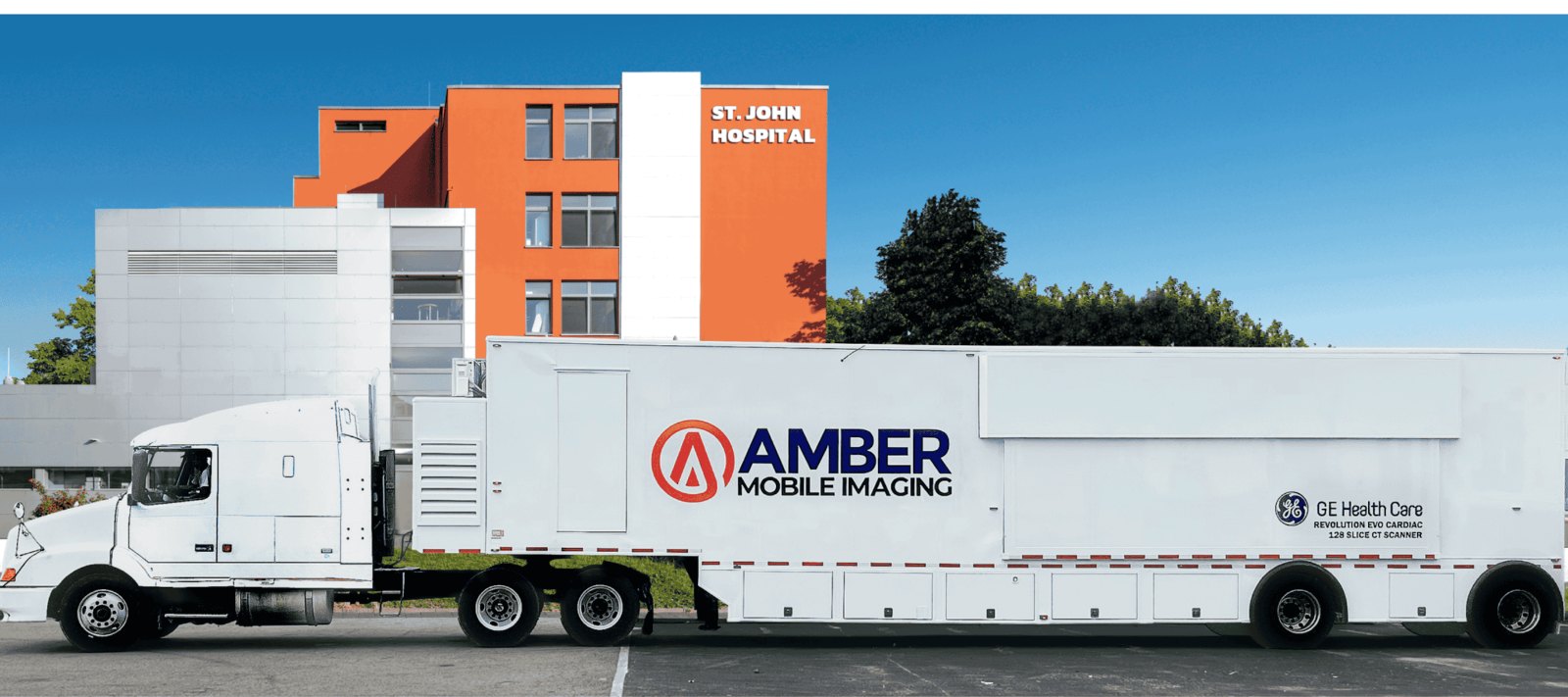
A mobile MRI is a heavy, precisely leveled structure delivered by tractor-trailer and used by patients arriving on foot, by wheelchair, or by stretcher. That combination sets the requirements.
Pad and Power
Units are set on a reinforced concrete pad sized to the coach footprint with room for the jacks. Exact dimensions, thickness, reinforcement, and load rating come on a coach-specific site drawing, so never pour from a generic spec found online. Asphalt is generally unacceptable under jack points because it deforms under concentrated load.
Most coaches require a dedicated 480V three-phase service with a properly sized disconnect adjacent to the pad. Amperage depends on the magnet, gradients, chiller, and HVAC load and appears on the same drawing. If your building cannot supply it, a rented diesel generator plus a fuel schedule becomes the answer. Have your electrician review this early: service upgrades are the most common cause of delayed start dates.
Access and Patient Path
The coach arrives on a tractor-trailer, so you need overhead clearance, no weight-restricted drive lanes, and enough turning radius to back into position. Walk the route before signing. Light poles, landscape islands, low canopies, and dumpster enclosures are the usual obstacles.
Patients need an accessible path from your building to the coach door: an ADA-compliant ramp or lift, a level landing, handrails, lighting, and a walkway usable in rain, snow, or heat. A canopy is a comfort item that becomes a clinical one in bad weather.
Magnet Safety Zoning
The magnet is always on. Define the controlled area around the coach, restrict ferrous objects, post signage, and screen everyone who approaches, including facilities staff and contractors. Our MRI site planning guide covers fringe field zoning, and the same principles apply outdoors.
Zoning and Permitting
Permitting is the most underestimated item because it is entirely local. Typical requirements include a temporary structure or trailer permit, an electrical permit for the service and disconnect, and sometimes a site plan review. Hospitals may also need to notify a state licensing agency.
- Call the building department first, before committing to a start date.
- Ask about duration limits. Some municipalities cap temporary permits at 90 or 180 days with a renewal process.
- Check noise ordinances if you will run a generator near residential property.
- Confirm parking counts. Losing spaces to the pad can trigger zoning review.
- Notify neighbors about delivery day and generator hours, which prevents complaints that become inspections.
Rental Terms and Notice Periods
Mobile MRI agreements are usually structured monthly with a minimum term. Common patterns, all negotiable:
- Minimum term. Often one to three months at the short end, with the best rates on six-, twelve-, and twenty-four-month commitments.
- Extension. Many agreements roll month-to-month after the initial term, which is valuable when a construction schedule slips.
- Notice to vacate. Typically 30 to 60 days written notice so the fleet can schedule transport.
- Scan volume. Most rentals are flat-rate rather than per-scan, so incremental volume improves your economics.
- Service response. Confirm response commitments, after-hours coverage, and what happens to rent during an extended outage.
- Early termination and holdover. Know the cost of ending early and the holdover rate past term.
Negotiate the extension clause hardest. Projects slip far more often than they finish early, and a favorable month-to-month rate is cheaper than an emergency re-rent.
From First Call to First Patient
For a planned rental, four to eight weeks is realistic. Emergencies compress it; permitting and electrical work extend it.
- Scoping call (day 1). Field strength, coil needs, volume, start date, term, and site address.
- Availability match (days 1–5). We identify coaches that fit and quote transport from your distance to the unit.
- Site review (days 3–10). Photos, a site plan, or a visit to evaluate pad location, power, delivery route, and patient path. You receive the site drawing here.
- Proposal and agreement (days 5–15). Rate, term, transport, accessories, service coverage, and insurance in one document. Signature reserves the unit.
- Permitting (weeks 2–6). Submit temporary structure and electrical permits the day you sign; this is the usual critical path.
- Site work (weeks 2–6). Pour and cure the pad, run electrical, set the disconnect, install ramp, canopy, and lighting.
- Delivery and setup (1–2 days). The coach is positioned, leveled, connected, and brought to operating condition.
- Verification and QA (1–2 days). Calibration and phantom testing before any patient is scanned.
- Connectivity and protocols (1–3 days). DICOM configuration, PACS validation, and protocol loading.
- First patient, with applications support on site through the opening days.
Choosing the Right Mobile MRI System
A 1.5T system covers the overwhelming majority of outpatient and community hospital work: neuro, spine, musculoskeletal, abdominal, and routine contrast studies. It is also the most available coach configuration, which means better pricing and start-date flexibility. If your fixed system is a 1.5T, matching it keeps protocols and comparison studies consistent.
Step up to 3.0T when the caseload requires it, such as advanced neuro, high-resolution small-joint work, or prostate imaging. Wide-bore coaches help with bariatric and claustrophobic patients and can reduce cancellations. Both cost more and are less abundant, so allow extra lead time. Our mobile MRI systems page shows the configurations that circulate most often.
Whichever you choose, confirm the coach carries the coils for the studies you must perform. Breast, cardiac, and small-extremity coils are the ones most often missing.
Rent vs. Lease vs. Buy
- Rent when the need has an end date, the timeline is uncertain, or you are testing demand. Anything under roughly twelve months is almost always a rental.
- Lease when you want a mobile unit for multiple years, want to preserve capital, and want a predictable payment with an eventual ownership or renewal decision.
- Buy when the volume is permanent and provable. A refurbished MRI purchase becomes the lower total-cost answer once the need stops having an expiration date, with refurbished systems commonly saving 30–70% versus new.
The financial mechanics behind those paths, including term structures, buyout options, and how to run the comparison, are covered in our companion guide, Lease a Mobile MRI: Lease vs. Rent vs. Buy.
Why Rent from Amber Diagnostics
Since 1994, Amber Diagnostics has bought, sold, rented, refurbished, and serviced medical imaging equipment from Orlando, Florida. That 30+ years matters on a rental because the hard parts are logistical: pad specs, power, delivery routes, permitting, and getting a coach calibrated on schedule. We support projects from site planning to shipping, installation and technical servicing.
We also place mobile CT and PET/CT units, so multi-modality projects run through one team. Browse the full imaging equipment rental fleet to see what we place most often. And if your rental bridges to a replacement, you can sell your outgoing MRI to Amber: submit the details, get a call from a specialist with a fair offer, then close and get paid.
Mobile MRI Rental FAQ
How much does it cost to rent a mobile MRI per month?
Mobile MRI rentals commonly run $25,000 to $45,000 per month, plus transport at roughly $5.50 to $10.00 per mile each way. Position within that range depends on field strength, coach generation, coil package, and term length, since a one-month emergency placement carries a premium over a twelve-month commitment. Budget separately for the pad, electrical service, permits, canopy and ramp, insurance, and staffing. A configured quote tied to your address and start date is the only reliable planning number.
What is included in a turnkey mobile MRI rental?
A turnkey rental typically includes the RF-shielded coach, the magnet, a standard coil package, HVAC and magnet cooling, the patient sub-waiting area, delivery and setup, system verification, cryogen management, and preventive plus corrective service for the term. Applications support for protocol loading and technologist orientation is usually included. It does not cover staffing, PACS licensing in many cases, the pad, utilities, permits, or insurance. Ask every vendor to confirm each line in writing.
How long does it take to get a mobile MRI on site?
Plan four to eight weeks from first call to first patient for a planned rental. That covers scoping, availability matching, site review, agreement, permitting, site work, delivery and setup, QA verification, and connectivity. Emergency placements move faster when a suitable coach is available and your site already has a pad and power. The three items that most often extend the timeline are electrical service upgrades, permit review queues, and concrete cure time.
What are the site requirements for a mobile MRI unit?
You need a reinforced concrete pad sized and rated for the specific coach, a dedicated power source (commonly 480V three-phase with a disconnect at the pad) or a generator, a delivery route with adequate overhead clearance and turning radius, and an ADA-compliant patient path with ramp or lift, level landing, handrails, and lighting. A canopy is strongly recommended. Build from the site drawing for the specific unit you are quoted rather than a generic spec, and ask for that drawing early.
Do I need a permit to park a mobile MRI at my facility?
In most jurisdictions, yes. Typical requirements include a temporary structure or trailer permit plus an electrical permit for the service and disconnect, and some municipalities add a site plan review if the pad displaces required parking. Duration limits are common, often 90 or 180 days with a renewal, so check that early if your project runs long. Hospitals may also need to notify a state licensing agency. Call your building department before committing to a start date.
Can I rent a mobile MRI for just one month?
Usually yes, though short terms carry the highest monthly rate and round-trip transport costs the same as it would on a twelve-month rental, so the per-scan economics are less favorable. One-month placements make sense for a defined outage such as a chiller replacement or a backlog clearing effort. If there is any chance the need extends, negotiate the month-to-month extension rate up front, because projects slip more often than they finish early.
Does a mobile MRI rental include a technologist?
No. Staffing is separate in nearly every mobile MRI rental. You provide technologists, front desk coverage, patient transport, and radiologist reading, either from your existing team or through a staffing agency. What the rental does include is applications support during startup, meaning protocol loading and orientation to the console and coach layout. Build technologist coverage for your scanning hours into the budget alongside the monthly rate; it is one of the largest non-rental costs.
Can a mobile MRI connect to our PACS?
Usually, but rarely automatically. Most coaches send DICOM studies and can be configured to your PACS, but your IT team typically needs to supply a network connection or VPN at the pad, open the appropriate ports, and license the new modality. Start that conversation in the first week of the project, not the week before delivery, because network runs to an outdoor pad and PACS license changes both have lead times.
Is renting a mobile MRI cheaper than buying one?
For a defined, temporary need, yes. Renting avoids capital outlay, construction of a fixed magnet room, and long-term service obligation. For a permanent need, ownership almost always wins on total cost. The crossover generally sits past the twelve-month mark, though the exact point depends on your rate, your volume, and what a comparable refurbished system costs. Refurbished MRI equipment commonly saves 30-70% versus new, which pulls the crossover earlier than many expect.
What power does a mobile MRI trailer require?
Most mobile MRI coaches require a dedicated 480V three-phase service with a disconnect adjacent to the pad, with amperage determined by the magnet, gradient system, chiller, and HVAC load on that specific unit. The exact requirement appears on the coach’s site drawing. If your facility cannot supply adequate service, a diesel generator can power the unit, which adds a rental line, a fuel schedule, and possibly a noise ordinance consideration near residential property.
What happens if the mobile MRI breaks down during the rental?
Service is typically covered under the agreement in a turnkey arrangement, so preventive maintenance, corrective repairs, and cryogen management are handled by the provider rather than billed to you. What you should confirm in the contract is the response time commitment, whether coverage extends to after-hours and weekends, and how an extended outage affects rent. Ask specifically what the remedy is if the unit is down beyond a defined number of days.
Can we rent a mobile MRI while our fixed system is being replaced?
Yes, and that is the single most common reason facilities rent. Interim coverage during a magnet swap keeps your schedule intact and keeps referring physicians from routing patients to a competitor during the outage, a relationship cost that often exceeds the rental cost. Plan for three to nine months depending on whether the project includes RF shielding rework or structural changes, and negotiate a month-to-month extension in case installation slips.
How far in advance should I book a mobile MRI rental?
Book as early as your timeline allows, and at minimum six to eight weeks before your target start date for a planned rental. Early booking gets you the widest choice of coaches, the best chance of matching your preferred field strength and coil configuration, and time to complete permitting and site work without compressing the schedule. Availability rather than price is usually the binding constraint, so identify a rental contact before you need one.
Related Guides
- Lease Mobile MRI: Lease vs. Rent vs. Buy
- Mobile Imaging Rental Guide
- Philips Mobile MRI: Buyer and Renter Guide
- Mobile CT Lease: Costs and Timeline
Request a Mobile MRI Rental Quote
Tell us your start date, field strength requirement, expected term, and site address, and a rental specialist will return a complete proposal: coach configuration, monthly rate, transport mileage, accessories, and service coverage in one document, plus the site drawing your contractor will need. Since 1994, Amber Diagnostics has helped hospitals, imaging centers, and practices keep their costs down and imaging capabilities high.
Toll Free +1 888-561-7900 · Direct 407-438-7847 · info@amberusa.com
