
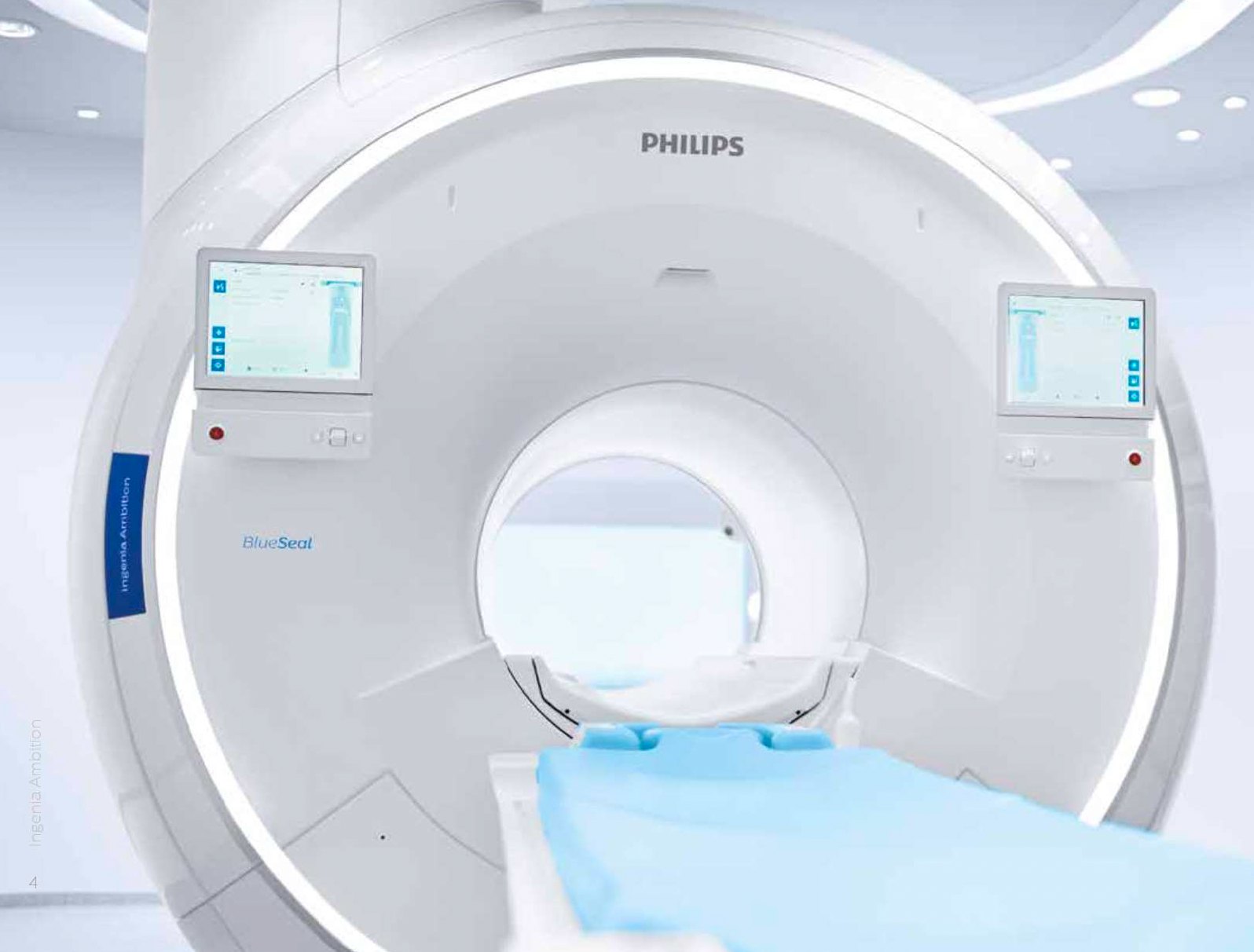
To buy a used MRI machine well, work through six decisions in order: field strength (1.5T for most general imaging, 3.0T for neuro, MSK detail, and research), bore type, magnet condition and whether the system stayed at field, coil inventory, software and console generation, and the seller’s refurbishment and QA process. Then budget beyond the scanner. Pre-owned MRI systems commonly run $100,000 to $450,000+ depending on configuration, and one-time project costs, rigging, shipping, RF shielding, installation with helium, regularly add six figures. Plan on 90 to 180 days from first call to first patient scan.
Table of Contents
- Step One: Field Strength (1.5T vs 3.0T)
- Bore Type: Standard, Wide Bore, and Open
- How to Read a Used MRI Spec Sheet
- Magnet History: At Field vs. Ramped Down
- Coil Inventory: The Hidden Cost
- Who Sells Used MRI Machines, and How to Vet Them
- Inspection, QA, and Phantom Testing
- The 10-Step Buying Process
- Site Planning Realities
- Logistics and One-Time Project Costs
- Warranty, Service Contracts, and Financing
- Buying a Used MRI: FAQ
- Request Used MRI Pricing
- Related Guides
Step One: Field Strength (1.5T vs 3.0T)
Field strength brackets everything downstream: price, siting, power, cooling, and the studies you can bill. 1.5T handles the large majority of clinical work. Brain, spine, abdomen, pelvis, breast, cardiac, and routine musculoskeletal imaging are all well served, and the platform is easier to site and far more available used. Most centers buying a first scanner land on a refurbished 1.5T MRI system.
A 3.0T MRI earns its premium for high-resolution neuro, functional and spectroscopic work, cartilage and detailed MSK, prostate protocols, and research. The trade-offs are real: more susceptibility artifact around hardware, higher RF power deposition that makes SAR limits easier to reach, heavier siting demands, and a price typically 25–60% above a comparable 1.5T.
| Factor | 1.5T | 3.0T |
|---|---|---|
| Best fit | General outpatient, spine, body, cardiac, routine MSK | Neuro, functional and spectroscopy, cartilage and MSK detail, prostate, research |
| Signal-to-noise | Excellent for nearly all protocols | Roughly double; spend it on resolution or speed |
| Used supply | Deep and consistent | Thinner, especially wide bore |
| Pre-owned price band | Lower and middle of $100,000–$450,000+ | Typically 25–60% above a comparable 1.5T |
| Siting and service | Lighter shielding, power, cooling; lower service cost | Heavier shielding, larger fringe field, higher service cost |
Look at your referral base, not your wish list. If orthopedic, neuro, and prostate referrals dominate, model the 3.0T. Otherwise a well-equipped 1.5T out-earns a stretched 3.0T budget.
Bore Type: Standard, Wide Bore, and Open
Bore geometry decides who you can actually scan.
Standard Bore (about 60 cm)
Best gradient performance per dollar, widest used selection, lowest siting cost. The limit is patient tolerance: larger and claustrophobic patients become difficult. Choose it when budget is the binding constraint.
Wide Bore (about 70 cm)
A wide bore MRI improves comfort, reduces sedation and no-shows, raises table weight limits, and simplifies off-center shoulder and hip work. If comfort drives your referrals, it is often the best return on incremental spend. Expect to pay more and wait longer.
Open MRI
Lower field strength with open architecture. Valuable for severe claustrophobia, pediatric cases, and very large patients, but image quality and sequence speed limit what radiologists accept for detailed neuro or MSK reads. Choose it only when that population is your core business.
How to Read a Used MRI Spec Sheet
Two listings for the same model number can be very different machines. Read in this order:
- Magnet: field strength, bore size, and manufacture date of the magnet, not just the system. Magnets outlive electronics and are often different ages.
- Gradients: amplitude in mT/m and slew rate in T/m/s, which drive diffusion capability and protocol speed.
- Software and licenses: exact release, and which application packages are licensed and transferable. Licenses often do not travel with hardware.
- Console and host: whether the host was replaced, and whether the OS still supports DICOM connectivity.
- Coils by part number, with quantities and channel counts.
- Chiller and cold head: make, age, whether it conveys, cold head hours, last replacement.
- Helium and magnet history: fill percentage, boil-off rate, quench events.
- Cabinets: RF amplifier, gradient amplifier, and PDU included. On some deinstalls these stay behind.
- Service history: records, error logs, and open faults at deinstall.
If a seller cannot produce this, that is your answer. Our MRI buying FAQ covers more questions worth asking before signing.
Magnet History: At Field vs. Ramped Down
This is the most important technical question in the transaction, and most first-time buyers never ask it. To move a scanner, the magnet is ramped down and helium recovered or vented. That is routine. What matters is how it was done. A controlled ramp-down bleeds current out under supervision; a quench is a sudden loss of superconductivity that dumps the field and boils off helium rapidly. Many magnets ramp back fine afterward, but repeated or unexplained quenches deserve documentation.
Did the magnet stay at field? A system that was ramped down and transported cold carries more risk and more cost than one kept energised through deinstallation. It is the single highest-leverage question on a used MRI.
- Did the system stay at field until deinstallation, or sit warm and idle for months?
- Was the ramp-down controlled and supervised, and by whom?
- Was helium recovered, and what was the fill level at the move?
- Has the magnet quenched? How many times, and what was the documented cause?
- What was the boil-off rate before deinstall? A rising rate signals vacuum or cold head problems.
- Has it been ramped back to field and shimmed since removal, or is it sold unproven?
The strongest buy is a magnet that was scanning patients the week it came out, ramped down under supervision, then ramped back and tested by the refurbisher. That is worth more than a small price gap.
Coil Inventory: The Hidden Cost
Coils are where used MRI budgets quietly break. A scanner without the right coils cannot perform the studies you planned to bill, and coils bought separately cost a meaningful fraction of the system price. Build the list from your protocols. A general outpatient center typically needs:
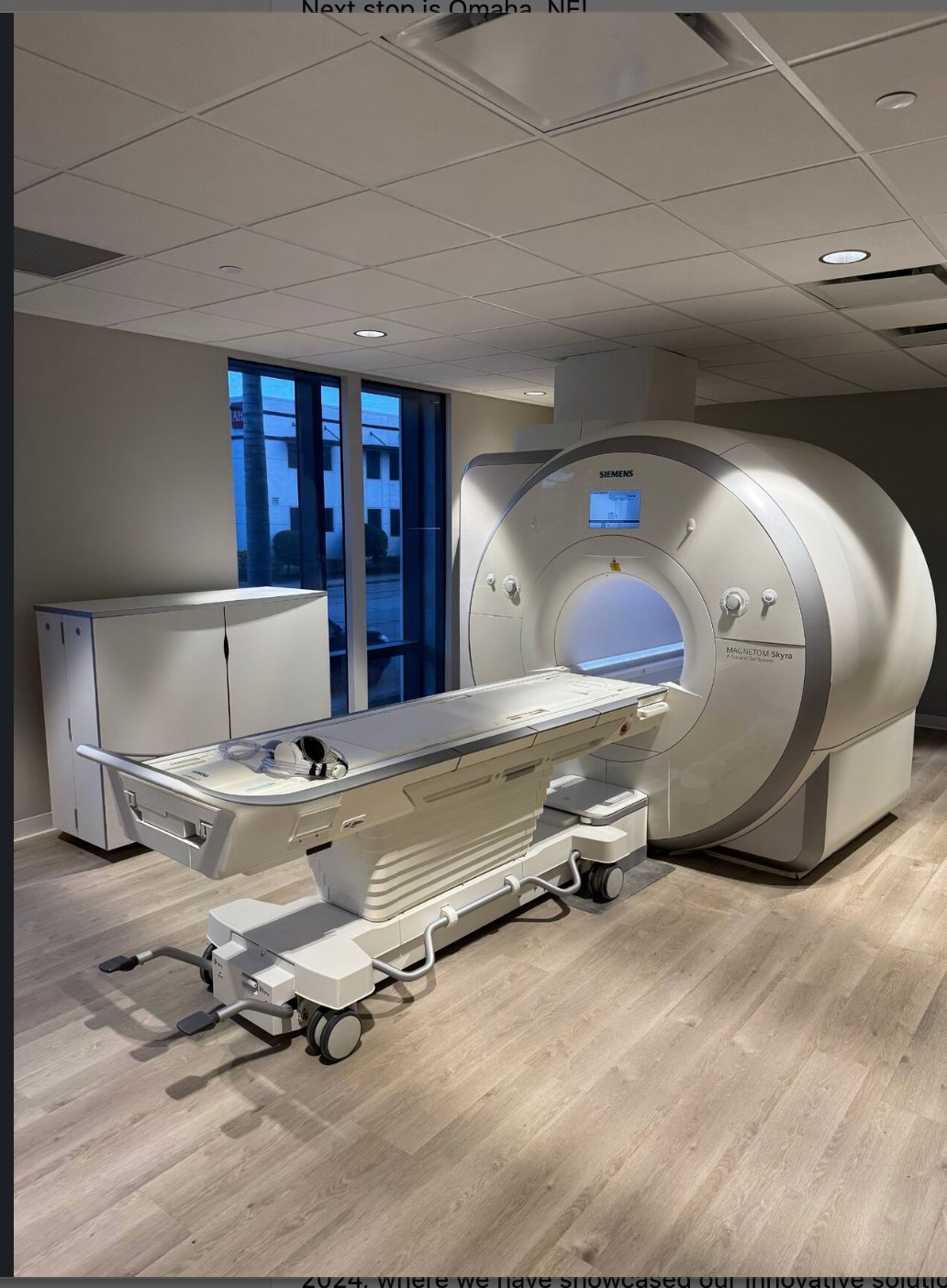
- Head/neuro coil: channel count enables parallel imaging and faster scans.
- Spine coil (usually table-embedded) and a body/torso array for abdomen, pelvis, and large-FOV work.
- Knee, shoulder, and extremity coils: the MSK workhorses behind orthopedic referrals.
- Breast coil for a breast program, a neurovascular array for MRA, and flex coils for difficult positioning.
Get part numbers and channel counts in writing, because “knee coil” describes several products at very different prices. Confirm compatibility with the console software version, and ask whether every coil was tested after the move. If a quote looks unusually low against the MRI pricing guide ranges, the coil list is usually why.
Who Sells Used MRI Machines, and How to Vet Them
- Full-service refurbishers. Buy, refurbish, sell, and service, supporting the project from site planning to shipping, installation and technical servicing. Lowest execution risk, warranty included.
- Brokers and dealers. Useful for sourcing, but confirm who is responsible for condition, deinstall, and installation.
- OEM certified pre-owned. Manufacturer-refurbished with OEM warranty; reliable, priced accordingly, less flexible.
- Hospitals selling directly. Sometimes the best value, but you inherit the whole deinstall and installation project.
- Auctions and as-is liquidation. Lowest price, highest risk. No warranty, no verified condition, no recourse.
Vetting Questions That Separate Sellers From Listings
- Do you own this system, or are you brokering someone else’s?
- Where is it located, and can my engineer inspect it?
- Was it powered up and tested under load, or is this a paper listing?
- Who performs deinstall and rigging, and is that cost in your quote?
- Who installs at my site, and are they trained on this platform?
- What does the warranty cover, and for how long?
- Can you provide references from facilities running this platform?
Amber Diagnostics has been on every side of these transactions since 1994. If you are replacing a scanner, you can also sell your current MRI to Amber: submit your equipment details, a specialist calls back with a fair offer, and once you agree you close and get paid.
Inspection, QA, and Phantom Testing
“Refurbished” is not regulated into a single meaning. Ask sellers to describe their process, then compare it against what a genuine refurbishment includes: transforming imaging equipment back into like-new condition so it meets the manufacturer’s performance specifications:
- Multi-point inspection of magnet, gradients, RF chain, cooling, table, console, and coils.
- Replacing and repairing worn parts: cold head, chiller components, cables, connectors, table mechanics, boards with fault history: plus electrical refurbishment of amplifiers, power distribution, and cabling.
- Ramp to field and shimming to verify homogeneity, then final calibration of gradients, RF, and center frequency.
- QA and phantom testing for signal-to-noise, uniformity, geometric accuracy, and spatial resolution.
- Coil-by-coil verification with documented results, plus cosmetic restoration.
Ask for the phantom report before shipment and again after installation. Those two data points tell you whether the system survived the move. Confirm your physicist’s acceptance testing is scheduled, since most states and accrediting bodies require it before the first billed study.
Comparing two quotes that both say “fully refurbished”? Talk to a specialist and we will walk both spec sheets line by line.
The 10-Step Buying Process
- Run a needs assessment. Project five years of volume by study type, plus referral base and payer mix. This sets field strength and coils.
- Set the total project budget, not just the scanner: construction, shielding, rigging, freight, installation, physics, service.
- Choose field strength and bore type and lock them. Changing mid-search resets the timeline.
- Complete a preliminary site survey. Confirm structural path, openings, quench pipe route, and utility capacity before committing to a system.
- Shortlist systems and request itemized quotes with spec sheet, coil part numbers, software version, and exclusions.
- Verify magnet and coil condition: at-field history, quench records, boil-off data, cold head hours, coil test results.
- Negotiate the complete package: price, warranty, deinstall, freight, rigging, installation, training, and first-year service as one deal.
- Finalize construction and shielding, and schedule crane day around the shielding installer.
- Deliver and install: rigging, magnet placement, enclosure closure, cabinets, ramp to field, helium fill, shimming.
- Test, train, and go live: phantom QA, acceptance testing, registration, accreditation, training, first patient scan.
Realistic timeline: 90 to 180 days, driven by construction rather than equipment availability. If you need revenue during the build, a mobile MRI rental provides interim imaging so referrals do not migrate.
Site Planning Realities
More projects slip on the building than on the equipment.
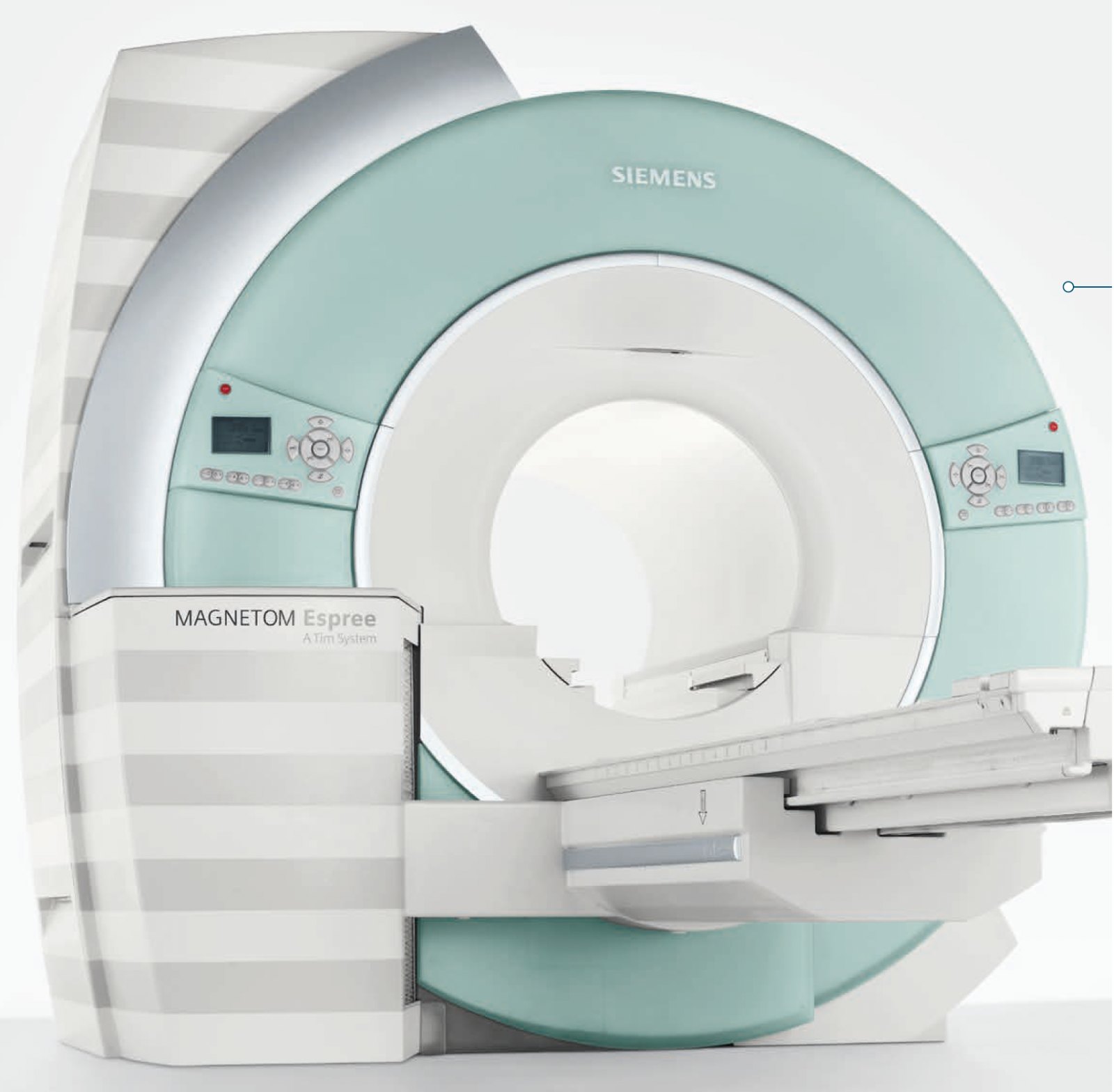
RF Shielding and the Magnetic Environment
Every MRI room needs a copper or steel RF enclosure with penetration panels for power, gas, and data, plus a fringe field plan keeping the 5 gauss line inside controlled space. That affects adjacent rooms and the floors above and below. Vibration and nearby steel degrade image quality and must be surveyed.
Quench Pipe and Structural Path
A superconducting magnet needs a quench vent carrying helium gas outside the building, with adequate diameter and limited bends. Simple in a single-story building; in a mid-rise with occupied floors above, it can become the most expensive line item. The magnet weighs thousands of pounds, so the route from truck to final position must support the load with clearance throughout. Door widths, corridor turns, elevator capacity, and floor loading are the usual obstacles, and many installs set the magnet by crane through a removed wall panel.
Utilities and Environment
- Power: dedicated three-phase service, clean grounding, isolation transformer where specified.
- Chiller: confirm whether one is included, whether it is compatible, and where it will sit.
- HVAC: equipment room cooling plus temperature and humidity control in the magnet room.
- Doors: measure the actual opening, not the drawing. Door width stops more installations than any other dimension.
- Safety zoning: four-zone layout, ferrous detection, signage, controlled access.
Our MRI site planning guide covers each.
Logistics and One-Time Project Costs
The scanner price is one line on a longer invoice. Pricing varies by location, building conditions, equipment selection, and market conditions.
| One-Time Project Cost | Typical Range (Hedged) | Notes |
|---|---|---|
| Pre-owned MRI system | Commonly $100,000–$450,000+ | Field strength, generation, bore, gradients, coils |
| Rigging and removal | Roughly $10,000–$12,000 | Higher for difficult access, upper floors, or crane work |
| Shipping and freight | Typically $5,000–$10,000 | Distance dependent; magnets need specialized carriers |
| Installation incl. Helium (1.5T) | Commonly $50,000–$80,000 | Ramp to field, shimming, calibration; 3.0T runs higher |
| RF shielding enclosure | Quoted per project | Room size, penetrations, shielding effectiveness |
| Construction and quench pipe | Quoted per project | Largest variable; a difficult route dominates the budget |
| Chiller and utilities | Quoted per project | Confirm a compatible chiller conveys |
| Physics testing and accreditation | Quoted per project | Required before billing in most jurisdictions |
Rigging and shipping are quoted after a site survey, because access drives the number more than distance. Normalize quotes before comparing: one seller’s “turnkey” price may include freight, rigging, and installation while another’s does not. For price bands by tier, see how much an MRI machine costs.
Warranty, Service Contracts, and Financing
Refurbished systems from a reputable seller ship with warranty coverage. What varies is scope. Read for four things: the term, whether parts and labor are both covered, whether the magnet and cold head are carved out, and response time commitments. Coil coverage is often limited, so confirm it.
Budget annual service at roughly 8–12% of equipment cost per year. Structures include full-service OEM coverage, independent service organization coverage, shared-risk plans, and time-and-materials with a parts stocking agreement. Full coverage removes budget variance; time-and-materials costs less until the year you need a cold head or gradient amplifier. Cryogen management deserves its own line: who supplies helium, and what happens in a quench.
Most facilities finance rather than pay cash, through equipment loans, capital leases with a purchase option, operating leases, or deferred-payment structures aligned to your ramp-up. Amber Diagnostics offers financing alongside equipment sales, and modeling the payment against projected volume often settles the 1.5T question.
First-Year Budget Framing
- Equipment: scanner, coils, accessories.
- One-time project costs: rigging, freight, shielding, construction, installation with helium, physics.
- Recurring: service at 8–12% of equipment cost, cryogen, PACS, staffing, accreditation.
Refurbished equipment typically saves 30–70% versus new, and on MRI that gap is often large enough to fund the construction package. That is how independent centers keep their costs down and imaging capabilities high.
Buying a Used MRI: FAQ
How much does it cost to buy a used MRI machine?
Pre-owned MRI systems commonly range from $100,000 to $450,000 and above, depending on field strength, generation, bore type, gradients, coils, and software licenses. New systems typically run $1 million to $3 million or more, so refurbished equipment usually saves 30–70%. Budget one-time costs too: rigging and removal roughly $10,000–$12,000, shipping typically $5,000–$10,000, and installation including helium commonly $50,000–$80,000 for a 1.5T. RF shielding and construction are quoted per project.
Should I buy a 1.5T or a 3.0T used MRI?
Buy 1.5T unless a specific clinical program justifies 3.0T. A 1.5T scanner covers brain, spine, body, cardiac, breast, and routine musculoskeletal imaging, is easier and cheaper to site, and is far more available used. 3.0T earns its 25–60% premium for high-resolution neuro, functional and spectroscopic imaging, cartilage and detailed MSK work, prostate protocols, and research affiliations. Look at your referral base rather than your wish list before committing.
What does “stayed at field” mean and why does it matter?
It means the magnet remained energized and cold with helium right up to deinstallation, rather than sitting warm and idle in a warehouse. That matters because a magnet scanning patients the week it was removed has demonstrated performance, a documented boil-off rate, and a known service history. Always ask whether the ramp-down was controlled and supervised, whether the magnet has quenched and why, and whether it has been ramped back and shimmed since.
How long does it take to install a used MRI machine?
Plan on 90 to 180 days from purchase decision to first patient scan. Equipment procurement is rarely the bottleneck; construction, RF shielding, the quench pipe route, and permitting drive the timeline. Physical installation once the room is ready typically runs one to three weeks, covering rigging, magnet placement, cabinets, ramp to field, helium fill, shimming, and calibration. Add time for phantom QA, physicist acceptance testing, accreditation, and applications training.
What coils should be included when I buy a used MRI scanner?
Build the list from your protocols, then get part numbers in writing. A general outpatient center usually needs a head/neuro coil, spine coil, body or torso array, knee, shoulder, and extremity coils, and flex coils. Add a breast coil for a breast program and a neurovascular array for MRA. Confirm channel counts, verify compatibility with the exact console software version, and ask for individual test results for every coil after transport.
Can I buy a used MRI machine directly from a hospital?
Yes, and occasionally it is the lowest headline price. The trade-off is that you inherit the whole project: deinstallation, rigging, transport, storage, refurbishment, installation, calibration, and QA, without a warranty or a single accountable party. Hospitals typically sell as-is with no representation about magnet condition or coil function. That works for buyers with in-house biomedical engineering. For most facilities, a full-service refurbisher costs more up front and less overall.
What is a quench pipe and do I really need one?
Yes, every superconducting MRI needs one. A quench pipe is a dedicated vent that carries helium gas safely out of the building if the magnet loses superconductivity and boils off its cryogen rapidly. Without it, released helium displaces oxygen in the scan room. The pipe needs adequate diameter and limited bends. Simple in single-story buildings; in multi-story buildings with occupied floors above it can dominate the construction budget, so verify the route early.
How much should I budget for MRI service and maintenance each year?
Budget roughly 8–12% of equipment cost per year. Full-service contracts from an OEM or independent service organization remove budget variance at a higher fixed cost, while shared-risk and time-and-materials arrangements cost less annually but expose you to large single events like a cold head, gradient amplifier, or RF component failure. Separately confirm who supplies helium and how cold head maintenance is scheduled, and budget PACS integration and accreditation fees.
What questions should I ask a used MRI seller before buying?
Ask whether they own the system or are brokering it, where it is located, and whether you can inspect it. Ask whether it was powered up and tested under load, who performs deinstallation and rigging, and who installs at your site. Ask for the full spec sheet with coil part numbers, magnet manufacture date, gradient specs, software version and transferable licenses, cold head hours, and quench history. Then ask what the warranty covers.
Do I need to buy a chiller with a used MRI?
Usually yes, unless your building already has compatible chilled water capacity. Many MRI systems require a dedicated chiller with its own power, drainage, and physical location, and chillers are not always included in a scanner sale. Confirm three things in writing: whether a chiller conveys, whether it is compatible with your platform and software version, and its age and service history. An included chiller at end of life is a year-one cost.
Can I rent a mobile MRI while my permanent room is being built?
Yes, and it is a common way to protect referrals during construction. Mobile MRI rentals provide interim imaging on your site with turnkey delivery and setup, so patients and referring physicians do not migrate to a competitor during a 90 to 180 day build. Mobile MRI rental commonly runs $25,000–$45,000 per month depending on system, term, and services included, with transport typically quoted at $5.50–$10.00 per mile each way.
Can I sell my old MRI machine to help fund a replacement?
Yes. Amber Diagnostics buys used MRI machines, CT scanners, PET/CT scanners, C-Arms, portable X-Ray systems, mammography systems, and bone densitometers directly from hospitals, imaging centers, and private practices nationwide. The process is three steps: submit your equipment details through the sell-equipment form, an equipment specialist calls back with a fair offer, and once you agree you close the contract and get paid. Trade-in proceeds are a simple way to reduce net upgrade cost.
Related Guides
- How Much Does an MRI Machine Cost?
- Philips Mobile MRI: Buyer and Renter Guide
- Mobile MRI for Rent: Costs and Site Specs
- Sell My MRI Machine: What to Expect
Request Used MRI Pricing from Amber Diagnostics
Tell us your patient mix, referral base, room dimensions, and budget, and an MRI specialist will match you with refurbished systems in current MRI inventory, with itemized quotes covering coils, warranty, freight, rigging, installation, and training. Since 1994, Amber Diagnostics has bought, sold, rented, refurbished, and serviced medical imaging equipment from our Orlando, Florida facility, supporting projects from site planning to shipping, installation and technical servicing.
Toll Free +1 888-561-7900 · Direct 407-438-7847 · info@amberusa.com
