
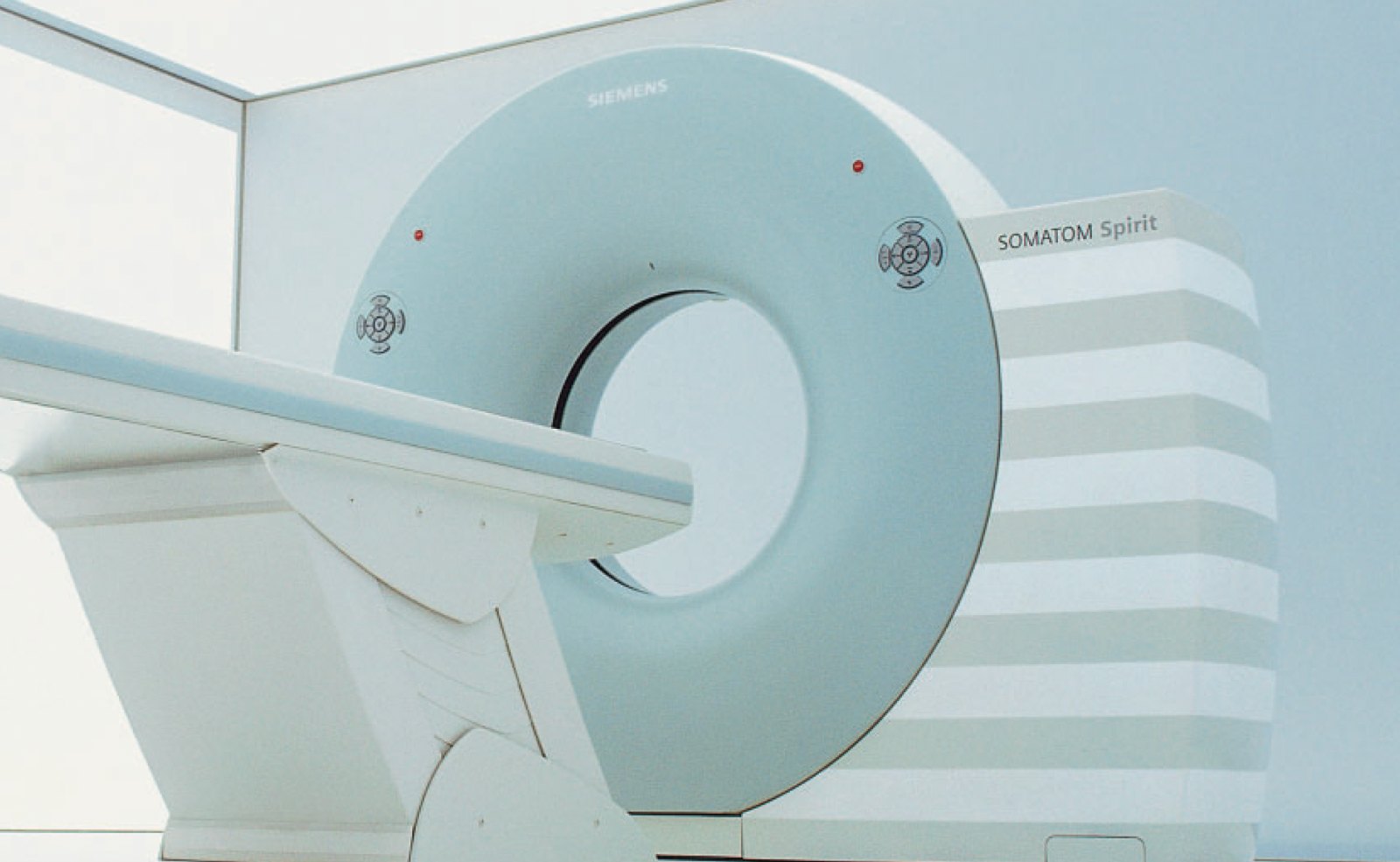
A CT scanner upgrade is two projects running at once, buying the replacement and offloading the outgoing system, and facilities that plan them together come out well ahead. On the buy side, CT scan machines commonly range from $90,000 to $900,000, with most facilities landing between $90,000 and $400,000 depending on slice count, detector generation, tube condition, and software. Refurbished systems typically save 30–70% versus new. On the sell side, your outgoing CT scanner still holds real market value while it remains supported for parts, its tube has usable life, and its licenses transfer. Amber Diagnostics buys CT scanners directly: submit your equipment details, an equipment specialist calls back with a fair offer, and you close and get paid.
Table of Contents
- Six Signs Your CT Scanner Is Due for Replacement
- Choosing the Replacement: Slice Count and Case Mix
- Beyond Slice Count: Detector, Tube, Table
- New vs. Refurbished CT Scan Machines
- What Your Outgoing CT Scanner Is Worth
- Why a Trade-In Credit Can Hide True Value
- Deinstallation and Rigging Realities
- Timing the Sale and Gathering Documentation
- The Upgrade and Offload Timeline, Step by Step
- How Selling Your CT Scanner to Amber Works
- CT Scanner Upgrade and Resale FAQ
- Request Pricing or Start Selling
- Related Guides
Six Signs Your CT Scanner Is Due for Replacement
Most CT replacement decisions get made late. The scanner keeps producing images, the capital request keeps sliding, and by the time the facility moves, the outgoing system has lost much of the resale value that could have funded the upgrade. Six signals mark the replacement window for a CT scan machine.
1. Parts Availability and End of Support
The most important signal, because it hits uptime and resale value at once. When an OEM announces end of support, parts move to the secondary market and lead times get unpredictable. It is also where market value falls fastest.
2. Rising Tube Failure Frequency
CT tubes are among the most expensive consumables in imaging. One replacement over a scanner’s life is normal. Once replacements start clustering within a few years of each other, the cost of keeping the system begins to compete with financing a newer one.
3. Service Costs Climbing
Service coverage commonly runs 8–12% of equipment cost per year. When contract plus unplanned repairs pushes well past that band, the math has turned. Track service spend and downtime hours for twelve months; those two numbers build a stronger capital case than any brochure.
4. Dose and Reconstruction Capability
Older filtered back projection systems need more dose for a diagnostic image than newer iterative and model-based reconstruction platforms. If radiologists want thinner slices, or pediatric protocols are dose-constrained, reconstruction alone can justify replacement.
5. Throughput Bottlenecks
Slower rotation, longer breath-holds, and slow reconstruction queues cost you studies per day. If a newer scanner adds four to six studies daily, payback on a refurbished system is often shorter than administrators expect.
6. Referring Physician Expectations
Cardiac CT and advanced vascular studies are not available on lower-slice platforms, so referring groups route those cases elsewhere. A lost referral stream never shows up on a service invoice.
Three or more means you are in the window, and the same conditions usually still leave the outgoing scanner with real resale value if you move before support ends.
Choosing the Replacement: Slice Count and Case Mix
Slice count is the headline spec and the fastest way to overspend. The right question is not how many slices you can afford, but what the most demanding study you will routinely perform over the next seven years requires.
| Slice Count | Best Fit Case Mix | Strengths and Limits | Typical Range (Hedged) |
|---|---|---|---|
| 16 Slice | Routine head, sinus, spine, chest, abdomen/pelvis; ortho and urgent care | Lowest entry cost, deep parts availability; no cardiac or high-end CTA | Entry tier, often near $90,000 |
| 64 Slice | Hospital and imaging-center workhorse; CTA, trauma, oncology staging | Volume sweet spot, broad software, strong resale; cardiac depends on gating | Mid band of $90,000–$400,000 |
| 128 Slice | Higher-volume centers, routine cardiac CTA, larger patient populations | Faster coverage, better temporal resolution; higher power and service costs | Upper end of $90,000–$400,000 |
| 256+ Slice | Cardiac programs, complex vascular, research, high-acuity service lines | Whole-organ coverage, advanced dose tools; overkill for general mixes | Commonly $400,000 and above |
A 64-slice with fast rotation and cardiac gating can outperform a poorly configured 128 for the studies you actually run. Resale value at your next upgrade is also highest on platforms that sell in volume. Our 2026 CT scanner pricing guide goes further on ranges.
Beyond Slice Count: Detector, Reconstruction, Tube, Table
Once slice count is bracketed, four specifications decide whether a given scanner is a good buy at its asking price.
- Detector design and coverage. Row count, element size, and z-axis coverage per rotation drive image quality and speed. Ask about detector condition and channel failure history, not just the spec sheet.
- Reconstruction package. Iterative and model-based reconstruction cut dose at equivalent image quality. Confirm which options are licensed on the specific unit; they are often optional and often missing.
- Tube capacity and current tube life. Heat capacity sets how many back-to-back studies you run before cooling delays appear. Ask separately for exposure or scan seconds on the installed tube.
- Table weight limit and bore. Verify rated table capacity and gantry aperture against the patients you actually scan, including bariatric volumes.
Room readiness belongs on the same list, since power, cooling, shielding, and floor loading change between generations. Our CT site planning guide covers what to verify before a system ships, and the CT scanner buying FAQ covers what surfaces late.
New vs. Refurbished CT Scan Machines
The refurbished market is where most imaging centers, orthopedic groups, and community hospitals do their CT buying, and the reason is arithmetic: refurbished imaging equipment typically costs 30–70% less than new. Across the modality, CT scanners run roughly $90,000 to $900,000, and most facilities land between $90,000 and $400,000. New OEM systems sit well above that band once software, installation, and service commitments are counted.
What you give up on a well-refurbished system is mainly the newest reconstruction generation and the longest support runway. What you keep is diagnostic image quality, warranty coverage, and a capital number your board will approve. We transform imaging equipment back into like-new condition so it meets the manufacturer’s performance specifications, with multi-point inspection, parts replacement, electrical refurbishment, final calibration, and phantom QA testing.
Not sure which tier your case mix justifies? Talk to a specialist and we will map your volumes to systems in inventory, then quote your outgoing scanner in the same conversation.
What Your Outgoing CT Scanner Is Worth
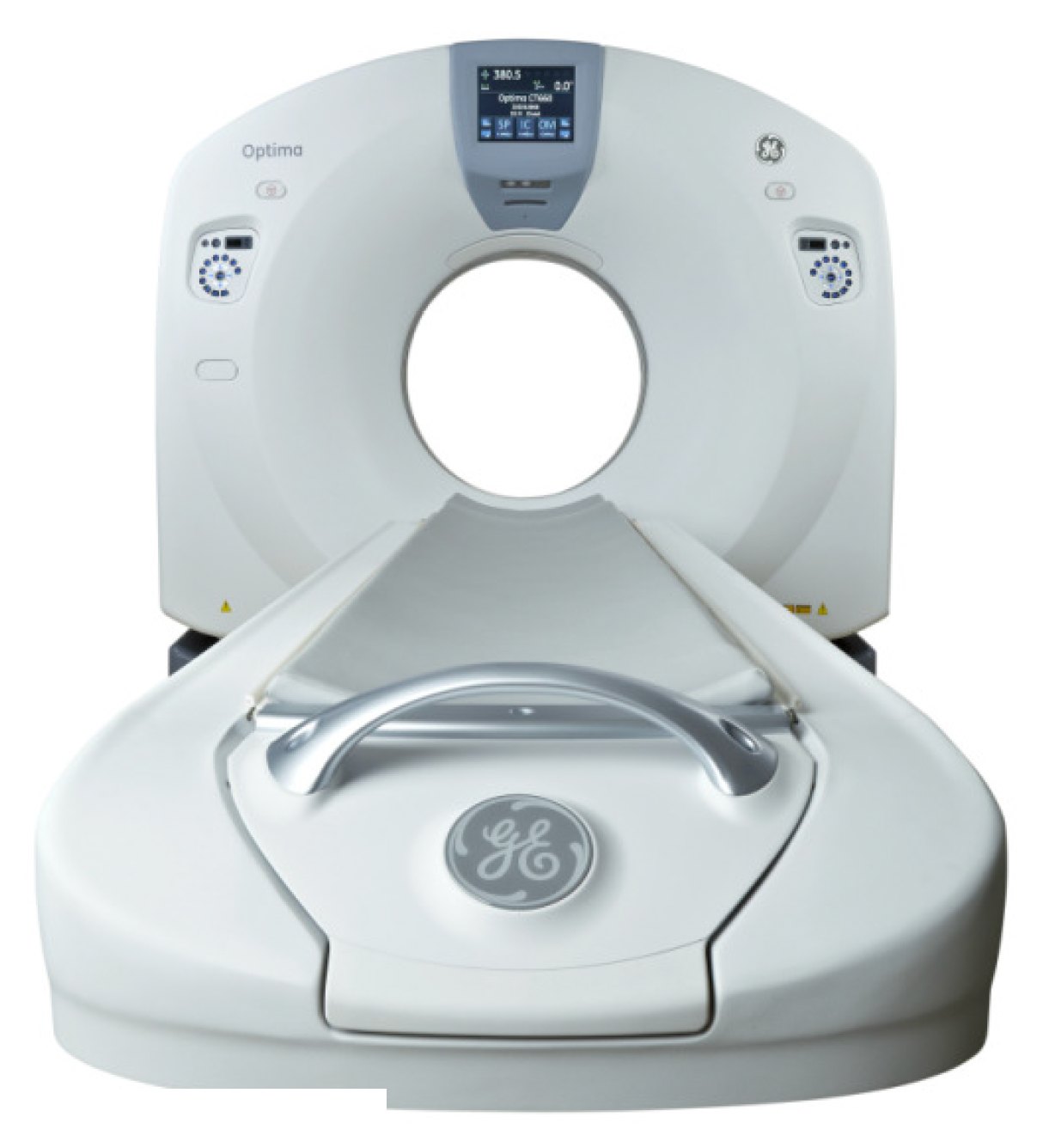
This is the half most facilities underplay. A CT scanner is not an expense to dispose of; it is an asset with a market. Eight factors set the number.
| Value Driver | What Buyers Look At | Effect on Offer |
|---|---|---|
| Model and year | Platform generation and install base | High-volume platforms hold value best |
| Slice count and configuration | Detector rows, rotation speed, coverage | Higher configurations bring more, if still supported |
| Tube condition | Exposure or scan seconds, current tube install date | Often the largest single swing factor |
| Detector condition | Dead or drifting channels, ring artifact history | Detector faults cut offers sharply |
| Software licenses | Which options are licensed and whether they transfer | Transferable advanced packages add real value |
| Service history | Continuous coverage, PM records, repair log | Documented service raises confidence and price |
| Cosmetic condition | Covers, table pads, monitors, console wear | Modest price effect, real effect on sale speed |
| Parts and support status | OEM status and third-party parts availability | The steepest cliff in the whole valuation |
Tube condition is what buyers ask about first, because a tube near end of life transfers a large liability to the purchaser. Pull the exposure or scan seconds off the console before requesting offers.
Support status is the cliff: value declines gradually with age, then drops abruptly once a platform loses support. Selling a year early beats selling two years late. For the deeper valuation walkthrough, see our guide on how to sell your CT scanner.
Why a Trade-In Credit Can Hide True Value
The vendor selling you the new scanner will usually offer to take the old one. Sometimes that is the right answer. It is also the easiest place to leave money behind, because a trade-in credit is a single blended number inside a larger transaction, and a generous-sounding allowance can be funded entirely by a less generous discount elsewhere.
A trade-in credit folded into a new-equipment quote can hide what your outgoing scanner is actually worth. Price the replacement and the sale separately, then compare. If the credit still wins, take it.
The fix costs you nothing:
- Ask for the quote with and without the trade-in. The difference is what the vendor is actually paying for your scanner.
- Get an independent market offer in parallel and compare it to that implied value.
- Price the logistics separately. Who pays for deinstallation, rigging, and transport can exceed the offer gap.
- Decide on total net cost: new system price, minus what you actually receive, plus logistics you carry.
Simplicity is a legitimate reason to take the trade-in, but make that choice with the comparison in front of you. Start Selling Here gives you the second number.
Deinstallation and Rigging Realities
A CT scanner does not roll out. Gantry, table, power distribution unit, cooling components, and console leave as separate pieces, and the building rarely cooperates.
- Path of egress. Door widths, corridor turns, elevator capacity, ceiling heights. Many CT rooms were built around the scanner, and some need wall openings.
- Floor loading. Gantries are heavy and concentrated; crews plan load paths and protect finished floors.
- Disconnection scope. Electrical, chilled water or air handling, and network drops usually involve licensed trades.
- Crating and transport. Detectors and tubes are shock-sensitive, and proper crating protects condition and value.
- Room disposition. Decide early whether the room is restored, reused, or returned.
Amber Diagnostics has handled this since 1994 and coordinates deinstallation and logistics as part of the purchase discussion.
Timing the Sale and Gathering Documentation
Sell While the System Is Still Supported
The best time to sell is while the scanner is still supported, still under service agreement, and still installed and demonstrable. A powered, functioning system is worth more than the same unit on pallets with an unknown history, so start the sell conversation in parallel with your purchase decision.
Documentation That Raises Your Offer
- Manufacturer, model, year, and serial number
- Current tube exposure or scan seconds, plus the tube’s install date
- Slice count and full configuration, including detector specifications
- Complete software license list with transferability noted
- Service contract history, PM records, and repair log
- Most recent calibration and QA results
- Photographs of gantry, table, console, and the egress path
- Target deinstall window and facility access restrictions
Assemble that package and you get faster, firmer offers. Without the tube number, buyers price the unknown conservatively.
The Upgrade and Offload Timeline, Step by Step
The failure mode in CT replacement is the coverage gap: the old scanner leaves before the new one is scanning, and you lose weeks of volume and referrals.

- Months 5–6 out: Define the requirement. Document case mix, projected volumes, and the most demanding routine study. Bracket slice count and must-have software.
- Months 4–5 out: Value the outgoing system. Pull tube seconds, service records, and license lists, then submit the sell form for an independent offer before any trade-in talk.
- Month 4 out: Quote the replacement. Request itemized quotes on refurbished CT scanners covering tube status, licenses, warranty, delivery, and installation.
- Month 3 out: Compare net cost and commit. Set the trade-in allowance against the cash offer, add logistics on both sides, and sign the purchase and the sale together.
- Month 3 out: Complete site planning. Verify power, cooling, shielding, floor loading, and egress, and book any construction now.
- Months 2–3 out: Bridge your coverage. If the room will be dark more than a few days, arrange a mobile CT rental. Book early; trailer, pad, and power all need lead time.
- Weeks 3–4 out: Schedule the swap. Lock deinstall and install dates, then set your last scan day on the old system and first on the new.
- Deinstall week: Remove and ship. Archive final studies in PACS, power down, deinstall, crate, ship, and prepare the room.
- Install week: Install, calibrate, test. Installation, calibration, phantom QA, physicist survey, and state registration updates where required.
- Go-live week: Train and ramp. Applications training, protocol build, then volume ramp. Release the mobile unit once the fixed scanner holds schedule.
Five to six months is a comfortable runway. Compressed projects work when a mobile unit decouples the clinical schedule from the construction schedule; our equipment rental fleet covers that bridge.
How Selling Your CT Scanner to Amber Works
We make it easy. Amber Diagnostics has bought used CT scanners directly from hospitals, imaging centers, and private practices nationwide since 1994. Three steps:
- Submit the form. Send equipment details on the sell equipment page: manufacturer, model, year, slice count, tube seconds, licenses, photos.
- A specialist calls with a fair offer. We review the configuration against current secondary-market demand and explain the number, including how logistics are handled.
- Close the contract and get paid. Agree to terms, sign, and we coordinate removal and transport on your schedule.
Because we buy, sell, rent, refurbish, and service imaging equipment, the whole project runs on one thread: the offer on your outgoing scanner, the quote on the replacement, a mobile unit for the gap, and support from site planning to shipping, installation and technical servicing. Ready to start? Contact us today.
CT Scanner Upgrade and Resale FAQ
How much do CT scan machines cost in 2026?
CT scanners commonly range from $90,000 to $900,000, and most facilities land between $90,000 and $400,000. Refurbished 16-slice systems sit at the bottom, 64-slice holds the volume middle, and 128 and 256+ slice platforms reach the top. Refurbished typically costs 30–70% less than new. Pricing depends on slice count, detector generation, tube condition, licensed software, warranty, and installation scope, so a configured quote is the only reliable budget number.
How do I know when my CT scanner needs replacing?
Watch six signals: parts availability tightening or an announced end of support, tube failures more than once every few years, service costs pushing well past the typical 8–12% of equipment cost band, reconstruction limits on dose or thin slices, throughput bottlenecks costing studies per day, and referrers sending advanced work elsewhere. Three or more means you are in the replacement window. Support status matters most, since it drives both clinical risk and resale value.
What is my used CT scanner worth?
Eight factors set it: model and year, slice count and configuration, tube condition in exposure or scan seconds, detector condition, whether software licenses transfer, documented service history, cosmetic condition, and parts-support status. Tube condition and support status move offers the most. A still-supported scanner with a recent tube and transferable advanced licenses can be worth substantially more than the same model brings once support ends. Submit your details for a specific offer.
Should I take the vendor’s trade-in or sell my CT scan machine separately?
Compare both before deciding. Ask the vendor for the purchase quote with and without the trade-in; the difference is what they are actually paying for your scanner. Then get an independent market offer and compare. Price logistics separately too, since who pays for deinstallation, rigging, and transport can exceed the offer gap. A blended trade-in number hides what each line is worth. Simplicity sometimes wins, but decide with both figures in hand.
How many slices do I actually need?
Buy for the most demanding study you will routinely perform over the next seven years, plus a small margin. Sixteen-slice handles routine head, sinus, spine, chest, and abdomen/pelvis work. Sixty-four-slice is the hospital and imaging-center workhorse for CTA, trauma, and oncology staging. One hundred twenty-eight suits higher-volume centers and routine cardiac CTA. Two hundred fifty-six and above belongs to dedicated cardiac and complex vascular programs. Buying two tiers above your real case mix is the most common overspend.
Can I sell a CT scanner that is no longer under manufacturer support?
Often yes, but expect a materially lower offer. Support status is the steepest cliff in CT valuation, because buyers are pricing their own future parts risk. Unsupported systems still find buyers when third-party parts remain available, when the install base is large, or when value sits in harvestable components such as a healthy tube or detector. The timing lesson is simple: selling a year before support ends beats selling two years after.
How long does a CT scanner upgrade project take?
Plan five to six months from defining the requirement to full clinical ramp. That covers requirement definition, valuing and selling the outgoing system, quoting and committing to the replacement, site planning and room modification, deinstall, install, calibration and QA, physicist survey, and applications training. Compressed timelines work when the room needs no modification. A mobile CT rental is what makes aggressive schedules possible, separating your clinical calendar from the construction calendar.
How do I avoid losing scan volume during the changeover?
Bridge the gap with a mobile CT unit. If your room will be dark more than a few days, a mobile scanner on site keeps studies in-house and keeps referring physicians from redirecting patients elsewhere. Referral patterns are far easier to keep than to win back. Book early, because the trailer, the pad, the power connection, and any permits need lead time. Release it once the fixed scanner holds schedule reliably.
What documentation should I gather before requesting an offer?
Have the manufacturer, model, year, and serial number; current tube exposure or scan seconds with the tube’s install date; slice count and full configuration including detector specifications; the software license list with transferability noted; service contract history, PM records, and repair log; recent calibration and QA results; photographs of gantry, table, console, and egress path; and your target deinstall window. Facilities that supply this package get faster, firmer offers.
Who handles deinstallation and rigging when I sell my CT scan machine?
Responsibility is set out in your offer and varies by transaction, so get it in writing. A CT deinstall means separating gantry, table, power distribution unit, cooling components, and console, planning a path of egress around door widths, corridor turns, elevator capacity, and floor loading, coordinating electrical and mechanical disconnects with licensed trades, and crating shock-sensitive components. Amber Diagnostics has coordinated this work since 1994 and plans it during the purchase discussion.
Is a refurbished CT scanner a safe purchase?
Yes, when it is genuinely refurbished rather than resold as-is. A properly refurbished CT scanner goes through multi-point inspection, replacement of worn parts, electrical refurbishment, cosmetic restoration, final calibration, and phantom QA testing so it meets the manufacturer’s performance specifications, and it ships with warranty coverage and installation support. That is the difference between a verified product and an unknown one, and it is why refurbished still saves 30–70% against new.
Does software transfer when I sell a CT scanner?
It depends on the license terms for each package, so confirm transferability in writing before closing either transaction. Some advanced options such as cardiac, dual-energy, perfusion, and vascular analysis are tied to the system and transfer with it, while others require reissue or repurchase. Transferable licenses add real value to your offer; non-transferable ones add none. The same question applies when you buy, since assuming a package is included is an expensive mistake.
Can Amber Diagnostics buy my old CT and sell me the replacement?
Yes, and handling both sides on one thread is usually simpler and cheaper. We buy, sell, rent, refurbish, and service medical imaging equipment, so one project can include a fair offer on your outgoing scanner, a configured quote on the refurbished replacement, a mobile CT rental to bridge the changeover, and support from site planning to shipping, installation and technical servicing. Coordinating deinstall and install through one team is how coverage gaps get avoided.
Related Guides
- CT Scan Machine Buyer’s Guide
- Sell My CT Scanner: Step by Step
- Mobile CT Lease: Costs and Timeline
- Who Buys Used Medical Imaging Equipment?
Request Pricing or Start Selling
Whether you are pricing the replacement, valuing the outgoing system, or both, one conversation covers it. Tell us your case mix and your current scanner’s details, and a CT specialist will quote refurbished systems available now and give you a fair offer on what you are replacing. Since 1994, from Orlando, Florida, Amber Diagnostics has helped facilities keep costs down and imaging capabilities high.
Toll Free +1 888-561-7900 · Direct 407-438-7847 · info@amberusa.com
