
Quick Answer: A new PET/CT scanner commonly costs well over $1 million, and premium digital configurations can run considerably higher depending on detector technology and CT slice count. On the secondary market, refurbished and used PET/CT systems commonly range from the mid six figures for recent time-of-flight platforms down to the low-to-mid $200Ks for older BGO-based systems with 8- or 16-slice CT components. The two biggest price levers are the PET detector generation (BGO vs. LSO/LYSO crystals, with or without time-of-flight) and the CT slice count (16, 64, or 128). Buying refurbished typically saves 30–70% compared to new while still meeting the manufacturer’s performance specifications. This guide walks through what a PET/CT scanner is, how the market prices each half of the system, what the major platforms cost, and how to plan a purchase from case-mix analysis to installation.
What Is a PET/CT Scanner?
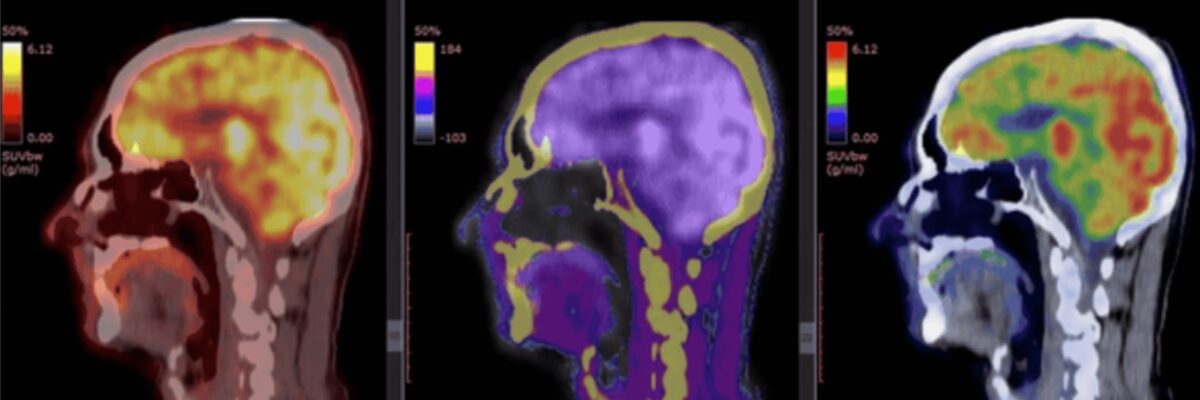
A PET/CT scanner is a hybrid imaging system that combines two modalities in a single gantry: positron emission tomography (PET), which maps metabolic activity using a radiotracer such as FDG, and computed tomography (CT), which provides detailed anatomical imaging. The system acquires both datasets in one session and fuses them, so clinicians see exactly where abnormal metabolic activity is happening within the patient’s anatomy.
That fusion is why PET/CT displaced standalone PET almost completely. A PET-only scanner could show a hypermetabolic lesion, but localizing it precisely required mentally overlaying separate CT or MRI studies — a slow process prone to registration errors. Hybrid PET/CT solved the problem in hardware. The CT component also handles attenuation correction for the PET data, shortening scan times and improving image quality compared to the old rod-source correction methods.
The practical consequence for buyers: you are really evaluating two machines at once. The PET half and the CT half each have their own technology generations, their own performance specifications, and their own effect on the final PET/CT scanner price. Understanding both halves is the key to comparing quotes intelligently, and it is the organizing idea behind this guide and our companion PET/CT pricing guide.
Core Clinical Applications
Demand for PET/CT is driven overwhelmingly by oncology, but the modality earns its keep across several service lines:
- Oncology staging and restaging. FDG PET/CT is a workhorse for initial staging, treatment-response assessment, and restaging in lymphoma, lung cancer, colorectal cancer, melanoma, head and neck cancers, and more. For most imaging centers, oncology referrals represent the large majority of PET/CT volume.
- Cardiology. Myocardial viability studies and, increasingly, perfusion imaging help cardiologists determine whether compromised heart tissue can benefit from revascularization.
- Neurology. PET/CT supports dementia workups (including amyloid and FDG brain imaging), seizure focus localization for epilepsy surgery planning, and movement disorder evaluation.
- Emerging tracers. PSMA agents for prostate cancer and other targeted radiopharmaceuticals continue to expand referral patterns, which is worth factoring into your volume projections.
Your expected case mix matters at the buying stage because it shapes the specification you actually need. A center focused on routine whole-body FDG oncology work has different requirements than one planning cardiac perfusion or research protocols, and that difference can easily shift the budget by six figures.
How PET/CT Scanners Are Priced: Two Halves, One Number
Because a PET/CT scanner is two systems in one housing, its market value is set by the technology generation of each half. Here is how each side moves the number.
The PET half: detector generation and time-of-flight
PET detectors are built around scintillation crystals, and the crystal material defines the generation:
- BGO (bismuth germanate). The older crystal chemistry, found in early hybrid platforms such as the GE Discovery ST family. BGO systems produce diagnostic-quality studies but have slower light output, which generally means longer scan times per bed position. They anchor the entry-level tier of the used market.
- LSO/LYSO (lutetium-based crystals). Faster, brighter crystals used in Siemens Biograph and Philips Gemini platforms and in GE’s later Discovery generations. Faster crystals support shorter acquisitions and better count-rate performance.
- Time-of-flight (TOF). On fast LYSO-class detectors, the electronics can measure the tiny time difference between the two annihilation photons and localize events along the line of response. TOF improves signal-to-noise, which matters most in larger patients. TOF-capable systems command a clear premium on the secondary market.
- Digital (SiPM) detectors. The newest generation replaces photomultiplier tubes with silicon photomultipliers. These systems — such as the Philips Vereos and the latest GE and Siemens digital platforms — sit at the top of the market and are only beginning to appear in refurbished inventory in meaningful numbers.
The CT half: slice count
The attached CT component typically comes in 8-, 16-, 64-, or 128-slice configurations. A 16-slice CT is entirely adequate for attenuation correction and anatomical localization in routine oncology work. Moving to a 64-slice PET/CT adds the speed and coverage needed for diagnostic-quality standalone CT, cardiac work, and CT-based protocols, while 128-slice PET/CT systems serve high-volume centers that want one gantry to do double duty as a full diagnostic CT scanner. Each step up in slice count commonly adds a meaningful increment to the price, roughly mirroring the premiums seen in the standalone CT market.
When you compare two quotes, always compare both halves: a TOF system with a 16-slice CT and a non-TOF system with a 64-slice CT can land at similar prices while serving very different clinical strategies.
Major PET/CT Platforms on the Secondary Market
Three OEM families dominate the pool of refurbished PET/CT scanners for sale:
GE Discovery family
The Discovery ST and STE (BGO detectors, typically 8- or 16-slice CT) are the classic entry points — proven, widely supported, and attractively priced. The Discovery 600/610 series stepped up detector performance, and the Discovery 690/710 brought LYSO crystals with time-of-flight and 64- or 128-slice CT options, making the 710 one of the most sought-after premium refurbished platforms.
Siemens Biograph family
Siemens built its Biograph line around fast LSO crystals from early on. The Biograph mCT (available with 40-, 64-, or 128-slice CT and TOF) remains a benchmark high-performance system on the used market, while the Biograph Horizon offers LSO performance in a value-oriented, lower-power package that suits many freestanding centers.
Philips Gemini and Vereos
The Philips Gemini TF was an early time-of-flight pioneer with LYSO detectors and an open gantry design patients tend to appreciate. The Vereos, Philips’ fully digital SiPM system, represents the newest generation and appears on the secondary market less frequently and at correspondingly higher prices.
All three families can be refurbished to run at the manufacturer’s performance specifications; the right choice usually comes down to your case mix, your service strategy, and the price tier you are targeting.
PET/CT Scanner Price Tiers in 2026

Every PET/CT deal is configuration-specific, so treat the figures below as planning ranges rather than quotes. Prices commonly vary with detector generation and CT slice count, plus condition, tube and crystal health, software licenses, and included accessories.
| Investment tier | Typical technology | Representative platforms | Common price range (refurbished) |
|---|---|---|---|
| Level 1 — Foundation | BGO detectors, 8–16 slice CT, no TOF | GE Discovery ST/STE, early Biograph | Commonly low-to-mid $200Ks to roughly $350K |
| Level 2 — Performance | LSO/LYSO detectors, 16–64 slice CT, early or no TOF | GE Discovery 600/610, Siemens Biograph Horizon, Philips Gemini | Commonly ~$350K–$550K |
| Level 3 — Premium | LYSO with time-of-flight, 64–128 slice CT | GE Discovery 690/710, Siemens Biograph mCT, Gemini TF | Commonly ~$500K to the mid six figures |
| New systems | Digital (SiPM) detectors, advanced reconstruction | Current GE, Siemens, Philips digital platforms | Commonly well over $1M; premium configurations higher |
Specific terms, pricing, and availability vary based on location, equipment selection, and current market conditions — a custom quote almost always tells you more than a generic range. For deeper modality-by-modality numbers, our buyer’s guides hub covers every major imaging category.
Considering an upgrade rather than a first purchase? Amber Diagnostics also buys used PET/CT scanners directly from hospitals and imaging centers — you can sell your used PET/CT scanner to Amber and put a fair offer toward your next system. Or simply contact us for a free quote and we will help you compare configurations against your budget.
What Else Drives the Cost of a PET/CT Project
The scanner itself is only part of the project budget. Three cost centers surprise first-time PET/CT buyers most often:
Radiopharmacy and the hot lab
PET requires handling positron-emitting radiopharmaceuticals, which means a dedicated “hot lab” — a shielded room for receiving, storing, assaying, and dispensing doses, with a dose calibrator, shielded storage, and appropriate waste handling. Most freestanding centers receive unit doses from a commercial radiopharmacy rather than operating a cyclotron, but the hot lab buildout, licensing, and radiation safety program still add real cost and lead time. Our PET/CT site planning guide walks through the room-by-room requirements.
Shielding and room construction
PET’s 511 keV annihilation photons are far more penetrating than diagnostic X-rays, so PET/CT suites commonly need substantially more lead (or concrete-equivalent) shielding than a CT room — in the scan room, the uptake rooms where injected patients wait, and adjacent occupied spaces. A physicist’s shielding report drives the design, and construction costs vary widely with the existing structure and floor level.
Workstations, software, and licenses
Fusion review workstations, oncology follow-up packages, cardiac or neurology applications, and advanced reconstruction options are frequently licensed separately. When comparing a used PET/CT scanner for sale against another listing, confirm exactly which licenses transfer — missing software can quietly add tens of thousands of dollars to an otherwise attractive deal.
Total Cost of Ownership: Beyond the Purchase Price
A realistic PET/CT budget looks at five-to-ten-year operating cost, not just the sticker. The recurring categories to model:
- Service coverage. Full-coverage contracts on hybrid systems commonly cost more than on standalone CT because two technology stacks are covered. Across imaging equipment generally, annual service often runs a meaningful percentage of equipment value; get PET/CT-specific quotes early, because serviceability varies by platform age and parts availability.
- Detector and crystal health. PET detector blocks and their electronics age; a quality refurbishment includes detector testing, calibration, and QA (phantom) testing, and your service plan should address detector block replacement. On the CT side, the X-ray tube remains the classic consumable — ask about tube usage and whether coverage includes it.
- Staffing. PET/CT requires technologists credentialed in nuclear medicine (or dual-credentialed PET/CT techs), a radiation safety officer, physicist support, and reading physicians comfortable with hybrid interpretation.
- Isotope supply. FDG has a roughly two-hour half-life, so doses are ordered per patient and decay in transit. Per-dose pricing depends heavily on your distance from the radiopharmacy and your daily volume; centers far from a supplier pay more and have less scheduling flexibility. Cancelled patients still often incur dose costs, which is why schedule discipline directly affects margins.
- Accreditation and compliance. ACR or IAC accreditation, state radioactive materials licensing, and ongoing QC all carry modest but real recurring costs.
None of these should scare a well-run center away — PET/CT commonly reimburses well relative to its operating cost at reasonable volumes — but they belong in the pro forma from day one.
New vs. Refurbished PET/CT: The Value Case
Refurbished PET/CT is one of the strongest value propositions in medical imaging, because the clinical capability of a well-maintained TOF system from the last generation still covers the overwhelming majority of oncology referrals. Buying refurbished typically saves 30–70% compared to new, and a professional refurbishment — multi-point inspection, replacing and repairing worn parts, electrical refurbishment, final calibration, and QA (phantom) testing — returns the system to the manufacturer’s performance specifications.
| Factor | New PET/CT | Refurbished PET/CT |
|---|---|---|
| Purchase price | Commonly well over $1M | Commonly low-to-mid $200Ks to the mid six figures |
| Savings vs. new | — | Typically 30–70% |
| Technology | Latest digital (SiPM) detectors, newest software | Proven BGO through TOF LYSO platforms; software per configuration |
| Delivery timeline | Often months, per OEM production schedule | Frequently faster, depending on inventory and refurbishment queue |
| Warranty and service | OEM warranty; OEM service contracts | Dealer warranty; OEM or independent service options |
| Best fit | Flagship academic and research programs | Most hospitals, freestanding imaging centers, and oncology practices |
The honest counterpoint: if your program depends on the newest digital detectors — very low-dose protocols, research requirements, or marketing positioning built around the latest platform — new may be the right call. For most buyers focused on keeping costs down and imaging capabilities high, a refurbished Level 2 or Level 3 system delivers the strongest return. Browse current PET/CT systems for sale to see what configurations are moving in 2026.
How to Buy a PET/CT Scanner: A Step-by-Step Walkthrough
Here is the sequence we recommend to buyers, refined over 30+ years of helping facilities purchase imaging equipment:
- Quantify your volume and case mix. Project realistic daily studies from referral commitments, and break them down by type — routine FDG oncology, cardiac, neurology, research. This drives everything downstream.
- Match detector generation and CT slice count to that case mix. Routine oncology at moderate volume can be well served by a Level 1 or Level 2 system; high daily throughput or larger patients favor time-of-flight; ambitions to run diagnostic CT on the same gantry point to 64 or 128 slices.
- Decide new vs. refurbished. Run the numbers from the tables above against your reimbursement projections. For most centers the refurbished math wins decisively.
- Start site planning early — including the hot lab. Engage a medical physicist for the shielding report, confirm structural floor loading and power, plan uptake rooms, and begin the radioactive materials license process, which commonly has the longest lead time in the whole project. The site planning guide covers the checklist in detail.
- Request quotes on complete configurations. Ask every vendor to itemize detector generation, CT slice count, tube usage, software licenses, workstations, warranty, delivery, and installation, so you compare like for like. Our PET/CT buying FAQ lists the questions worth asking on every call.
- Plan installation, applications training, and go-live. Coordinate rigging and delivery with construction completion, schedule physicist acceptance testing, arrange applications training for your technologists, and line up your radiopharmacy supply agreement before the first patient is booked.
A good equipment partner handles most of this alongside you — from site planning to shipping, installation and technical servicing — rather than dropping a crate at your dock.
Mobile PET/CT Rental: The Interim Option
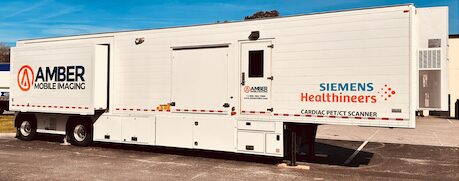
Not every facility should buy first. A mobile PET/CT rental puts a fully outfitted scanner in a trailer at your site — turnkey, with delivery and setup handled — and it solves three common problems:
- Volume testing. Run PET/CT one or two days a week and let real referral data, not projections, justify (or postpone) a fixed installation.
- Interim imaging. Keep patients on campus during construction, equipment replacement, or unexpected downtime instead of referring them out.
- Bridging the buildout. Start scanning and generating revenue while your fixed suite, shielding, and licensing are completed.
Rental economics are inherently short-term — a fixed system is cheaper per scan once volume is steady — but as a proving ground, a mobile unit is often the least risky first step into the modality. The mobile PET/CT rental FAQ answers the common logistics questions about pads, power, and staffing.
Frequently Asked Questions
How much does a PET/CT scanner cost?
Refurbished PET/CT scanners commonly range from the low-to-mid $200Ks for older BGO-based platforms with 8- or 16-slice CT up to the mid six figures for recent time-of-flight systems with 64- or 128-slice CT. New systems commonly cost well over $1 million, with premium digital configurations higher. The final number depends on detector generation, CT slice count, condition, software licenses, and what the seller includes — warranty, installation, and training can shift comparisons meaningfully. Always evaluate itemized quotes on complete configurations rather than headline prices.
What is the difference between BGO and LSO/LYSO PET detectors?
The crystal material determines how fast and bright the detector is. BGO is the older chemistry — reliable and diagnostic, but slower, which generally means longer scan times. LSO and LYSO crystals are faster and brighter, supporting shorter acquisitions and, on capable electronics, time-of-flight imaging that improves image quality, especially in larger patients. On the secondary market, BGO systems anchor the entry tier while LSO/LYSO time-of-flight systems command a premium, commonly a difference of six figures between tiers.
Is a refurbished PET/CT scanner reliable?
Yes — when it is professionally refurbished. A quality refurbishment includes multi-point inspection, replacement and repair of worn parts, electrical refurbishment, final calibration, and QA (phantom) testing, so the system meets the manufacturer’s performance specifications before it ships. Reliability then depends on the same things it does for a new system: a sound service plan, tube and detector health monitoring, and routine QC. Amber Diagnostics has refurbished and supported imaging equipment since 1994, and refurbished buyers typically save 30–70% versus new.
What CT slice count do I need on a PET/CT?
For routine oncology PET/CT, a 16-slice CT handles attenuation correction and anatomical localization well, and it keeps the purchase price down. Choose 64 slices if you want diagnostic-quality standalone CT capability, cardiac applications, or faster coverage for high throughput; choose 128 slices if the scanner will double as a primary diagnostic CT in a high-volume setting. Slice count is one of the two main price levers, so match it to real clinical plans rather than buying headroom you will not use.
Can I rent a PET/CT scanner before buying one?
Yes. Mobile PET/CT rentals place a trailer-based scanner at your facility on a short-term basis, with turnkey delivery and setup. Facilities commonly use rentals to test referral volume before committing to a fixed installation, to maintain interim imaging during construction or downtime, or to start scanning while a permanent suite is being built and licensed. If steady volume materializes, purchasing a refurbished system usually becomes the more economical long-term path.
What site requirements does a PET/CT installation have?
Plan for more than a standard CT room. PET’s 511 keV photons require substantially heavier shielding, designed from a physicist’s report, in the scan room and the uptake rooms where injected patients wait. You will also need a shielded hot lab for receiving and dispensing radiopharmaceutical doses, a radioactive materials license, adequate structural floor loading and power, and a radiation safety program. Licensing commonly has the longest lead time in the project, so start it early — often months before delivery.
Related guides from Amber Diagnostics
- CT Scan Machine Guide: Types, Slice Counts, and 2026 Prices
- Mobile Imaging Rentals: Costs and What's Included
- Selling a Used CT Scanner: How Much Is Yours Worth?
Get a Free PET/CT Quote from Amber Diagnostics
Since 1994, Amber Diagnostics has helped hospitals, imaging centers, and oncology practices buy, sell, rent, and service PET/CT scanners — transforming imaging equipment back into like-new condition so you can grow your business without going over budget. Whether you are comparing a Discovery 710 against a Biograph mCT, planning your first hot lab, or testing volume with a mobile unit, our specialists will walk you through configurations, pricing, and site planning for your specific project.
Get a Free Quote today, or call us Toll Free at +1 888-561-7900 or direct at 407-438-7847. With our experienced team and extensive resources, we promise to bring excellent support and reliable end-to-end service.
