
If you are not ready for the commitment needed for a fixed PET-CT scanner, a Mobile PET-CT may be perfect for you as well
When you decide that a PET-CT Scanner is right for you, you may hear about Mobile PET-CT and wonder what the differences are, and whether a Mobile PET-CT may be right for you.
You want to consider whether you live in a city that offers a PET-CT scanner in a facility – if not, it may be a good idea to have one that can travel from place to place in order to get to patients that are sicker and cannot travel far, and to alter location based on patient volume and gain revenue from multiple clinics and hospitals.
If you are not ready for the commitment needed for a fixed PET-CT scanner, a Mobile PET-CT may be perfect for you as well.
Since a fixed PET-CT and a mobile PET-CT are virtually the same thing except for their location and flexibility, they are well suited for smaller hospitals and healthcare facilities that don’t see as many patients as larger hospitals, so having a fixed PET-CT wouldn’t be defensible in terms of cost.
If you choose a Mobile PET-CT, your installation time will be significantly reduced, and you’ll have a lower initial investment as well.
Get Started
Request Pricing Today!
We’re here to help! Simply fill out the form to tell us a bit about your project. We’ll contact you to set up a conversation so we can discuss how we can best meet your needs. Thank you for considering us!
Great support & services
Save time and energy
Peace of mind
Risk reduction
A Mobile PET-CT may also be a good choice if you want to test out a PET-CT first, instead of risking making the mistake of installing one that you aren’t sure will be used very often.
However, some of the things that may be an issue with mobile PET-CT’s include operating costs, which are usually much higher because of trailer and truck maintenance, fuel, costs associated with the driver, etc. Since the mobile PET-CT can move around and cover a wider audience in terms of patients, the extra costs may be justified.
Limited interior space may also be an issue with mobile PET-CT’s, and patients with claustrophobia may have an even harder time in a small mobile trailer.
These are all things to think about when considering a Mobile PET-CT scanner, and our experts here at Amber can certainly answer any other questions you may have about them. Give us a call today and find out for yourself.
Featured
Our Most Requested
PET/CT Scanners
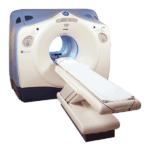
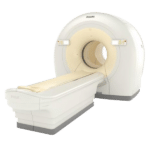
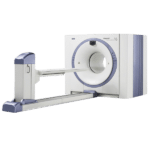
Planning a Mobile PET-CT Deployment
A mobile unit changes where the scanner sits. It does not change what a PET program requires. The facility still needs a workable trailer site, a shielding and traffic-flow review, a way to receive and handle radiopharmaceuticals, an uptake space, qualified staff, a quality-control routine and the applicable radioactive-materials authorization. Those obligations travel with the imaging, not with the building.
When a mobile unit tends to make sense
- Bridge coverage during a replacement, a renovation or unplanned downtime
- Scheduled service for a lower-volume site that cannot fill a fixed scanner every day
- Temporary capacity while referral patterns and demand are still being measured
- A longer-term program at a site that can support the trailer and the clinical workflow around it
Feasibility checklist
Site and access. Tractor and trailer route, turning radius, a level pad, the patient path from building to trailer, weather contingency, emergency access, and power, data and utility connections.
Radiation safety. An equipment-specific shielding review, controlled areas, staff monitoring, the hot-lab or dose-handling arrangement, uptake space, and decay and waste procedures.
Licensing and people. NRC or Agreement State responsibilities, authorized users, radiation-safety oversight, technologist qualifications, and any state facility or equipment requirements that apply where the trailer parks.
Supply chain. Radiopharmaceutical supplier, delivery windows, a backup plan, storage and handling, and schedule coordination with the scan day.
Commercial scope. Scanner and trailer identity, term, transport, setup and removal, service and uptime terms, staffing, consumables, insurance, extension terms and exclusions.
Five questions for a written proposal
- Which scanner and trailer configuration is being proposed?
- What site work and utility connections are the facility’s responsibility?
- Who owns each licensing, staffing, quality-control and radiopharmacy task?
- What happens if delivery, radiopharmaceutical supply or equipment uptime is disrupted?
- What is included at startup, during the term and at removal?
Comparing mobile against fixed
Compare the two using the same service definition on both sides: expected operating days, patient volume, staffing, radiopharmaceutical delivery, downtime risk, site work, licensing schedule and long-term program goals.
Mobile service can remove the need for a permanent scanner room during a defined period. It adds transport, pad, access and scheduling constraints. A fixed installation gives you a dedicated workflow and a schedule you control, and it brings its own capital, construction and operating plan. Which set of tradeoffs matters is a local question, and only a local feasibility review answers it.
Write down the assumptions behind the decision: expected schedule, volume, staffing, supplier coverage, site constraints and project term. Note which ones were verified and which are still provisional. When one of those inputs changes, run the comparison again rather than relying on the earlier conclusion.
Talk through a specific project
Send Amber the site, the schedule, the expected term and the current status of your PET program, and ask for a project-specific review. Ask for availability, scope and responsibilities in writing. Licensing and staffing rules vary by jurisdiction, so treat this section as planning guidance rather than legal or radiation-safety advice.
